
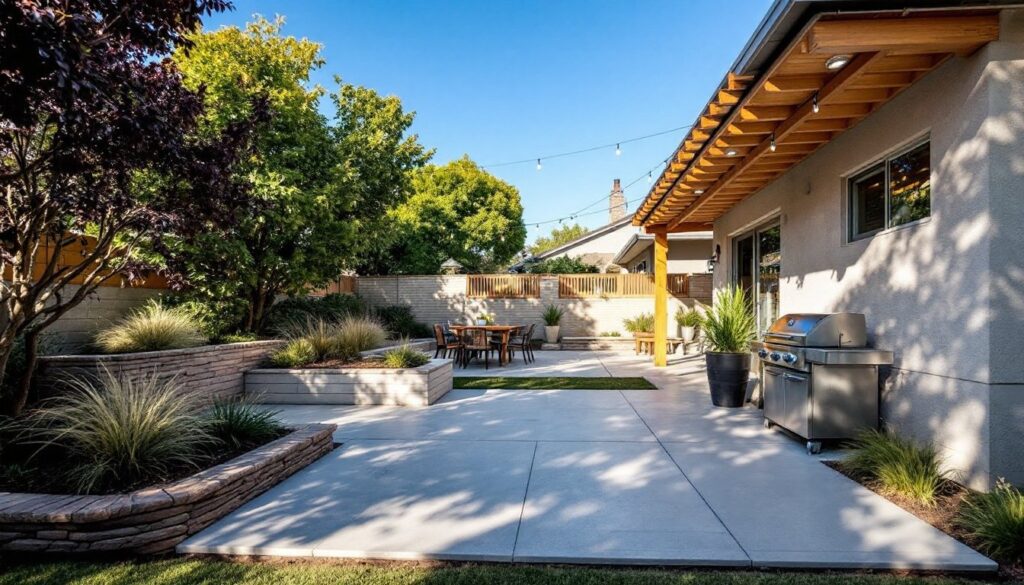
A cramped patio doesn’t have to be permanent. Whether someone’s looking to entertain guests, create an outdoor dining area, or simply expand their living space, a back patio extension can transform how the home functions and feels. The good news: most patio projects don’t require hiring a contractor. With careful planning and honest assessment of skill level, many homeowners can tackle portions of the work themselves, or know exactly what to outsource. This guide covers practical back patio extension ideas, from hardscape foundations to covered structures and integrated landscaping, all grounded in real materials, measurements, and feasibility.
Key Takeaways
- Back patio extension ideas range from hardscape foundations with concrete or permeable pavers ($6–$18 per square foot) to covered structures like pergolas and solid roofs, offering flexibility for different budgets and skill levels.
- Hardscape is the critical foundation—proper grading with at least 1/8-inch slope per foot prevents water pooling, and modular pavers provide easier DIY installation than poured concrete for smaller extensions.
- Covered patios and pergolas extend usability into shoulder seasons and rain; pergola posts must be set below the frost line (36–48 inches) for code compliance, and attached roofs require professional installation or thorough code review to avoid water intrusion.
- Functional outdoor zones should include dining areas (minimum 10-by-12 feet), entertainment anchors like grills or fire tables ($1,500–$3,500), and built-in seating along perimeter edges for cost savings and defined gathering spaces.
- Landscaping integration using raised beds, strategic shrub placement, and xeriscaping softens hardscape edges while reducing wind and glare, with gravel transitions costing $3–$8 per square foot.
- Success lies in honest planning: prioritize hardscape first, add structure and shade second, finish with landscaping and lighting, and know when to outsource (roofing, gas lines, electrical) to prevent expensive mistakes and ensure code compliance.
Hardscape Patio Expansions
The foundation of any patio extension is a solid, properly graded hardscape. This is where most homeowners either save money through DIY effort or invest wisely by hiring experienced installers, there’s rarely a middle ground on concrete work.
Poured Concrete and Permeable Pavers
Poured concrete remains the most economical and straightforward option for large-area expansions. A standard 4-inch slab (nominal thickness) is appropriate for residential patio use: thicker bases are overkill unless the area will support vehicle traffic. Concrete typically costs $6–$12 per square foot installed, depending on region and finish. A handy homeowner with basic tools can form, pour, and finish a small section (under 200 square feet), but the work is heavy and requires proper grading to slope away from the house at a minimum 1/8-inch drop per foot to prevent water pooling.
Permeable pavers, including porous concrete, recycled rubber, or permeable asphalt, are gaining traction because they manage runoff and comply with increasingly strict stormwater codes in many jurisdictions. They cost more upfront ($12–$18 per square foot installed) but reduce liability if heavy rainfall causes drainage issues. Homeowners should check local codes before deciding: some areas mandate permeable surfaces for patios above a certain size.
For smaller extensions, modular pavers (stone, brick, or composite) offer flexibility and easier DIY installation. Pavers require a compacted gravel base (4–6 inches) and edge restraints, but no heavy equipment or skilled finishing. Budget $8–$15 per square foot, and plan 2–3 days for a typical 300-square-foot project if working solo.
Covered Patio and Pergola Structures
A covered patio extends usability into shoulder seasons and rain without the full commitment of a three-season room. The choice between a pergola, lattice cover, and solid roof depends on budget, local wind/snow load codes, and whether the homeowner wants partial or complete weather protection.
Pergolas (open-roof structures with slats) provide dappled shade, allow rain through, and cost $30–$60 per square foot installed. They’re popular DIY projects if the builder is comfortable with post footings, lag bolts, and straightedge routing. Posts must be set below the frost line (typically 36–48 inches deep, depending on local code) in concrete footings, this is non-negotiable for structural integrity and code compliance.
Solid patio covers (polycarbonate or metal panels over a frame) block weather entirely and cost $50–$100+ per square foot. These often require permits because they’re considered permanent structures: wind and snow load calculations based on local building codes determine beam sizing and spacing. A handy homeowner can manage framing and fastening, but if sizing or placement is uncertain, consulting a licensed engineer or contractor for one-time plan review ($200–$500) saves expensive mistakes.
Attached-roof structures (extending from the house) must tie into the existing roof system and fascia properly to avoid water intrusion and structural failure. This typically requires professional installation or at minimum, a thorough code review. Roofing, flashing, and tie-ins are where amateur mistakes cause the most expensive problems.
Creating Functional Outdoor Zones
A well-designed patio extension divides space into purpose-driven zones, making the area feel intentional rather than empty.
Dining and Entertainment Areas
Dining zones thrive with 10-by-12-foot minimum dimensions, enough to accommodate a 4-person table plus surrounding seating and passage. If entertaining larger groups, bump this to 14-by-14 feet or larger. The surface must be level (slopes greater than 1/8 inch per foot create wobbly chair legs) and positioned to catch prevailing breezes without facing harsh afternoon sun if possible.
Outdoor kitchens (built-in grills, counters, storage) anchor entertaining zones and cost $5,000–$25,000 depending on appliance quality and finish. A simpler, budget-friendly approach: a free-standing stainless-steel grill on a concrete pad (under $2,000 installed) plus built-in bench seating along edges. Built-in seating takes advantage of the patio perimeter, costs $15–$25 per linear foot (less than free-standing furniture), and creates a defined gathering space.
Fire pits or outdoor fireplaces centralize social gatherings and extend fall/winter usability. A gas fire table ($1,500–$3,500) requires a dedicated gas line (usually $500–$2,000 for installation by a licensed technician) but offers reliability and easy operation. Wood-burning fire pits are cheaper to install but dirtier and create more smoke if wind-dependent.
Lighting elevates function and ambiance. String lights add warmth and cost under $200 but require sturdy overhead structure. Recessed deck lighting, pathway lights, or uplighting on landscaping give professional polish and run $2,000–$5,000 for a full system: most require low-voltage wiring (DIY-friendly) or line-voltage work (electrician recommended for code compliance and safety).
Landscaping and Garden Integration
Strategic landscaping softens hardscape edges and creates visual interest. Raised planting beds, typically 12–24 inches tall, made from composite lumber, cedar, or galvanized steel, frame the patio perimeter and define boundaries. They’re the rare landscape element most homeowners can build and install solo in a weekend, using simple fasteners and a level.
Planting tall shrubs or ornamental grasses on the north or west sides of a patio reduces wind and afternoon glare without blocking views or access. Choose species suited to the hardiness zone and sun exposure: local extension services offer free plant selection guides specific to each region.
Vertical gardens (wall-mounted planters, trellis systems, or living walls) maximize small spaces. They’re primarily decorative and functional for herbs or shallow-rooted plants: they cost $500–$3,000 installed and add a polished, high-end appearance.
Xeriscaping (low-water landscaping with mulch, rock, and drought-tolerant plants) complements modern patio designs and reduces maintenance. This approach appeals to water-restricted regions and homeowners prioritizing sustainability. Gravel or permeable mulch transitions between hardscape and planted areas, costs $3–$8 per square foot, and requires occasional raking to maintain appearance.
Water features (fountains, ponds, or recirculating streams) add movement, sound, and visual focal points. A simple recirculating fountain costs $500–$2,000 and plugs into a standard outlet: installation is mostly DIY if the site has accessible power. Larger water features or ponds typically need professional design and installation due to grading, drainage, and safety code considerations.
Conclusion
A back patio extension doesn’t have to be an all-or-nothing investment. Start with the hardscape foundation (concrete or pavers), add structure and shade as budget allows, then layer in functional zones and landscaping. The key is honest planning: identify which tasks genuinely suit DIY effort and where professional help prevents costly mistakes. Smart sequencing, hardscape first, structure second, finishing touches last, keeps the project on track and the budget realistic. The result is outdoor space that genuinely gets used, adds resale value, and transforms how the home functions year-round.