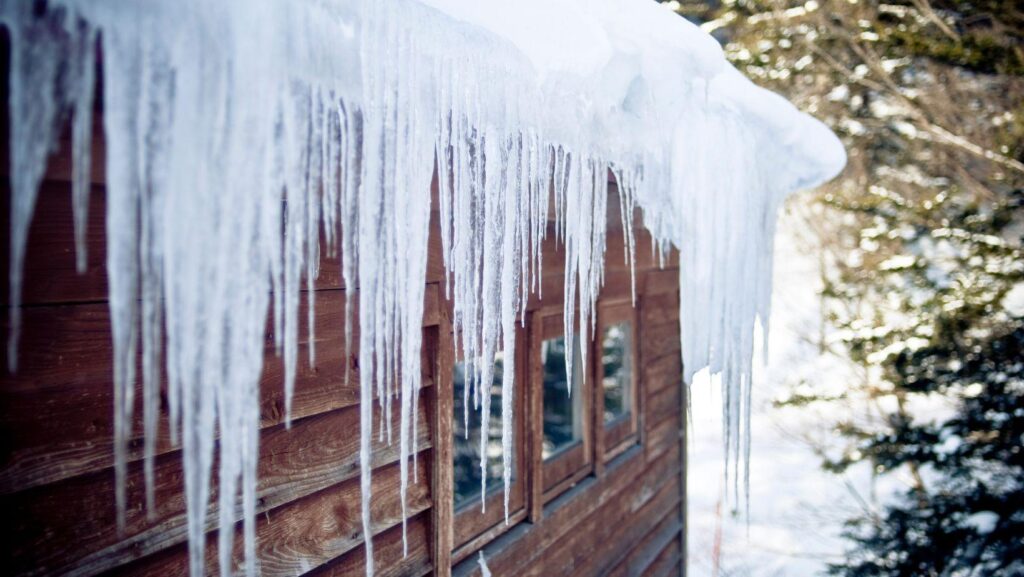
An ice dam is a ridge of ice that forms along the edge of a roof and stops melting snow from draining off. The water that backs up behind it has nowhere to go but under the shingles, and from there into the sheathing, the insulation, and eventually the ceiling below.
Pennsylvania is close to ideal ice dam territory. Winters swing above and below freezing for weeks at a time, snow comes in wet and heavy, and a large share of the housing stock in Pittsburgh, Philadelphia, and the towns in between was built before anyone thought hard about attic air sealing. If you’ve ever seen a row of thick icicles hanging off a gutter in February, you’ve seen the visible end of an ice dam.
The good news is that ice dams are almost entirely preventable, and the fix is usually not on the roof at all. It’s in the attic.
Why ice dams form
Ice dams need three things: snow on the roof, a roof surface above freezing near the top, and a roof surface below freezing near the edge.
Heat escaping from the living space into the attic warms the underside of the roof deck. Snow melts from the bottom up and runs downhill. When it reaches the eave, which sits past the exterior wall and gets no heat from the house, it refreezes. Each cycle adds another layer. Within a few days of the right conditions you have a solid ridge of ice with a pool of meltwater sitting behind it.
The heat is the problem. According to the Department of Energy’s Building America program, the most important step in preventing ice dams is sealing the air leaks between the conditioned house and the attic, ahead of both insulation and ventilation. Attic ventilation matters, but it’s there to carry off the heat that gets past the first two defenses, not to substitute for them.
Two things people commonly blame that are not the cause:
- Gutters. Gutters don’t cause ice dams. They fill with ice because the dam is already forming above them. Removing gutters does not fix the problem.
- Thin or old shingles. Shingle type has nothing to do with whether an ice dam forms. It only affects how much water gets through once one exists.
How to prevent ice dams: the four steps that actually work
These are in order of impact. Do the first two before spending money on the third or fourth.
1. Air seal the attic floor
Warm air moves into the attic through every gap in the ceiling plane: recessed can lights, bathroom exhaust fans, plumbing stacks, the furnace flue, the attic hatch, top plates, and drywall seams. Building America identifies these as the common leakage paths, and they matter more than the insulation that sits on top of them. Insulation slows heat conduction. It does nothing to stop warm air from flowing straight through a hole.
Air sealing is the highest-return item on this list and the one most often skipped. A weekend with a can of spray foam, some caulk, and a weatherstripped attic hatch cover addresses most of it in an older Pennsylvania home. Recessed lights that aren’t rated for insulation contact need airtight covers or replacement.
2. Bring the attic insulation up to a real depth
Once the air leaks are closed, insulation does its job. North Dakota State University Extension puts the target for northern climates at roughly R-50, which works out to around 15 inches of blown-in insulation. Most western Pennsylvania attics built before 1990 have somewhere between R-11 and R-19, often compressed, often with bare spots near the eaves where the roof pitch gets tight.
Two rules when adding insulation: don’t block the soffit vents (install baffles first), and don’t compress what’s already there.
3. Ventilate so the roof deck stays cold
Ventilation’s job is to keep the underside of the roof deck at or near the outdoor temperature. That takes continuous intake at the soffits and continuous exhaust at the ridge, with every rafter bay open between them. Building America’s guidance calls for venting every bay at the intake side and using ridge vents at the peak. Gable vents alone don’t move air across the full roof.
The usual failure in older homes is soffit vents that were painted over, sealed by a previous siding job, or buried in insulation. Check them from the attic side with a flashlight: you should see daylight at the eave.
4. Add ice and water shield when the roof is replaced
Self-adhering ice and water membrane installed at the eaves, valleys, and around penetrations is the backstop. It doesn’t prevent ice dams, but it stops the water behind them from getting into the house. Pennsylvania building code requires it at the eaves in most of the state, extending from the roof edge to at least 24 inches inside the exterior wall line. On a low-slope roof or a house with a history of ice dams, a good installer will run it further.
This is the one item on the list that has to wait for a roof replacement. If your roof is within five years of the end of its life and you’ve had ice dam leaks, it’s worth pulling the replacement forward rather than living through another winter of it.
What to do if you already have an ice dam
Prevention is a fall project. If it’s January and you have water coming through the ceiling, the priorities change.
Do:
- Rake snow off the lower three to four feet of the roof from the ground with a roof rake. Less snow, less meltwater, less ice.
- Fill a leg of pantyhose with calcium chloride ice melt and lay it across the dam, perpendicular to the eave. It melts a channel that lets the pooled water drain. Do not use rock salt; it damages shingles and kills anything the runoff lands on.
- Aim a box fan at the wet spot from inside the attic if you can reach it. Cold air freezes the leak.
- Call a contractor with steam equipment if the dam is large or the leak is active. Low-temperature steam removes ice without cutting into the shingles.
Don’t:
- Chip at the ice with a hammer, hatchet, or shovel. You’ll go through the shingles.
- Climb onto an icy roof.
- Run heat cables as a permanent fix. They treat the symptom, use electricity all winter, and mask the underlying heat loss.
When to call a roofer
Air sealing and insulation are attic work, and a good insulation contractor or an energy auditor can handle both. Bring in a roofer when the leak has already happened, when the soffit or ridge venting needs to be cut in or corrected, or when the roof is due for replacement and you want the ice and water shield run correctly.
In the Pittsburgh area, a full-service Whalen Exteriors roofing company inspection covers the attic side as well as the roof side, because a replacement that doesn’t address ventilation and heat loss will ice up the same way the old roof did. If a contractor quotes a new roof for an ice dam problem without ever going into your attic, get another quote.
Frequently asked questions
- Are ice dams covered by homeowners insurance? Sudden water damage from an ice dam is usually covered. Ice dam removal itself and any damage attributed to long-term neglect or lack of maintenance usually isn’t. Document the damage with dated photos before any repair and check your policy’s wording on “weight of ice and snow.”
- Will a metal roof stop ice dams? No. Metal sheds snow more readily, which reduces the raw material, but a warm roof deck still melts what’s there. Ice dams form on metal roofs with poor attic air sealing.
- Does more attic ventilation always help? Only if intake and exhaust are balanced. Adding exhaust without enough soffit intake can pull warm, moist air up from the house, which makes things worse.
- How do I know if my attic is the problem? On a cold, snowy day, look at your roof next to your neighbors’. If the snow on yours is melting in patches while theirs is even, heat is escaping into your attic.