
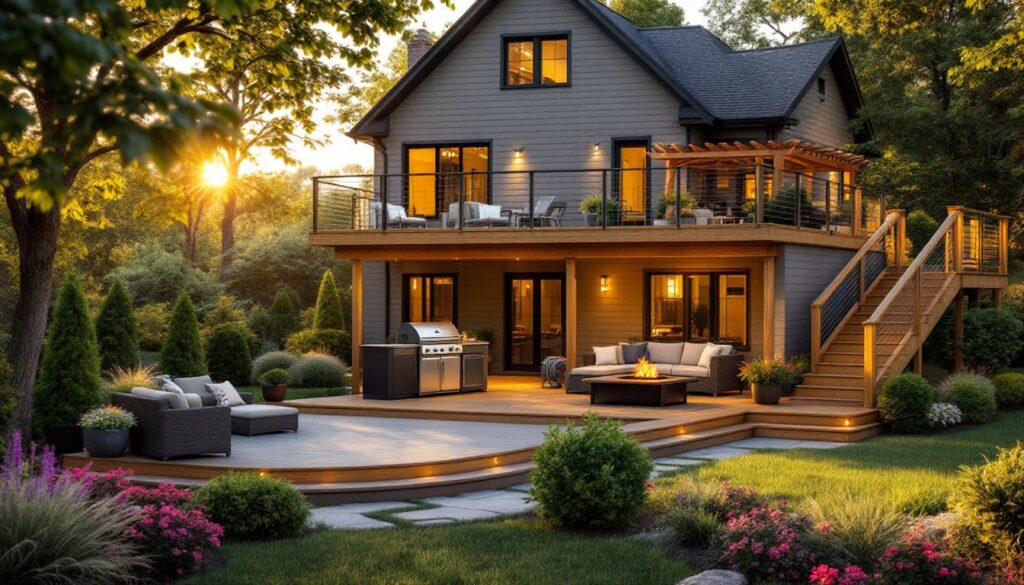
Two-level decks have moved beyond the “nice to have” category into essential backyard real estate. When done right, a tiered deck design maximizes usable space, creates natural traffic flow, and adds serious visual punch to an outdoor area. Whether someone’s working with a sloped lot or simply wants to define separate zones, entertaining on one level, dining on another, a two-level deck delivers both function and curb appeal. The challenge isn’t whether to build one: it’s figuring out the design, materials, and layout that fits the specific property and budget. This guide walks through practical two-level deck ideas, from modern design concepts to budget-smart approaches, so anyone can plan a project that transforms their backyard.
Key Takeaways
- Two-level deck designs maximize usable backyard space, create natural traffic flow between zones, and add visual appeal that can increase home resale value.
- Modern tiered deck concepts feature clean lines, mixed materials, and layouts like wraparound platforms and floating designs that make yards feel more expansive.
- Material choices matter: composite decking on the upper level paired with budget-friendly pressure-treated lumber on the lower level balances cost and maintenance while enhancing visual contrast.
- Proper placement of stairs, railings, and lighting—including code-compliant post spacing and LED features—transforms a two-level deck into a functional evening retreat while ensuring safety.
- Budget-conscious homeowners can keep two-level deck projects under $8,000 using pressure-treated lumber, minimal railings, and staged building across seasons.
Why Two-Level Decks Are Worth The Investment
A two-level deck solves real problems. On sloped terrain, a single-level deck either sits too high in one corner or requires an expensive retaining wall. A tiered approach follows the natural grade, reduces excavation, and sits more naturally on the landscape. That’s practical engineering, not just aesthetics.
Beyond function, two-level decks create visual interest that flat decks can’t match. They define zones, a lower level for lounging and conversation, an upper deck for grilling and prepping food, without needing walls or fence lines. This separation also helps with noise management and privacy: guests naturally cluster at different elevations rather than crowding one space.
Resale value is real, too. A well-executed two-level deck signals quality craftsmanship and adds outdoor living square footage that buyers notice. Unlike some DIY projects, a properly built deck improves home value because it’s permanent infrastructure, not a trend item.
The catch: two-level decks demand more planning than single-level builds. Post placement, stair construction, railing codes, and load calculations get more complex. That’s why doing the assignments upfront, checking local building codes, hiring a designer if needed, and understanding material requirements, is non-negotiable before breaking ground.
Modern Tiered Design Concepts For Maximum Appeal
Contemporary two-level decks often feature clean lines, mixed materials, and integrated features that blur indoor-outdoor boundaries. A popular approach is the stepped platform design: the upper deck sits slightly offset from the lower one, creating a cascading effect that makes the yard feel more expansive.
Another strong concept is the wraparound tiered layout, where the upper deck wraps around the house while a lower deck extends into the yard. This creates an L-shaped or U-shaped footprint that offers multiple seating areas and directs foot traffic naturally. The upper level stays connected to the home’s back door, while the lower platform becomes a destination.
Floating deck aesthetics take the modernist angle further. Using hidden support posts and minimal railings (glass or cable rail systems), designers create an illusion of the deck floating above grade. This works especially well on sloped lots where one level is significantly higher than the other.
For visual impact, consider incorporating mixed materials: composite decking on the upper level paired with pressure-treated lumber on the lower, or vice versa. This contrast isn’t just pretty, it’s practical. Composites hide stains near the grill: pressure-treated is affordable for larger areas. Some builders use contrasting deck board colors or orientations (parallel boards on one level, perpendicular on another) to emphasize the level separation.
Multi-Purpose Two-Level Layouts
The best two-level decks work harder than they look. The upper deck as entry zone makes sense: it’s adjacent to the house, perfect for a grilling station, minibar, or drink prep area. A 10×12 upper platform gives ample room for a grill, side tables, and a small built-in cooler bench.
The lower deck as gathering space handles lounging and conversation. Without grill smoke and prep clutter, it stays comfortable for longer periods. A 12×16 or 14×16 lower platform can accommodate sectional seating, a fire table, or a hot tub (factoring in load capacity and waterproofing).
Stair placement changes everything. Centered stairs create symmetry but use deck footage. Side stairs (running along one rail) save central space and let the lower deck feel more open. Some builders create two stair runs at opposite ends, adding wayfinding options and preventing a bottleneck.
Integrated storage under the upper deck or inside a riser is often overlooked but saves yard real estate. A sealed cabinet built into the stair stringers holds cushions, pool toys, or tools, things that would otherwise require a separate shed.
For those with young kids or pets, a lower corner deck with integrated sandbox or play zone near the lower level keeps entertainment close to sightlines from inside the house. The upper deck then becomes the adult zone, safer for hot grills and glassware.
Material Combinations That Enhance Visual Impact
Material choice shapes both durability and aesthetics. Pressure-treated lumber (typically 2×6 or 2×8 deck boards in southern pine or Douglas fir) remains the budget option. It’s affordable, readily available, and easy to work with, but requires regular staining or sealing every 2–3 years. Nominal dimensions like 2×6 are actually 1.5×5.5 inches: plan accordingly.
Composite decking (wood-plastic blend) costs 2–3× more upfront but needs no staining and resists rot, splinters, and stains. Popular brands include Trex, Fiberon, and Azek. It’s heavier, so stairs and railings need reinforced framing. Composites also expand and contract with temperature: installers must leave appropriate gaps between boards (usually 1/4 inch).
Mixed material strategy works well for two-level projects. Use composite on the upper deck (high foot traffic, close to the house where appearance matters) and pressure-treated on the lower level (larger area, more budget-friendly). This balances cost and maintenance without looking mismatched if colors complement each other.
Railing materials deserve attention. Codes require a 4×4 post every 6 feet and balusters spaced no more than 4 inches apart (vertical rails, not horizontal, kids shouldn’t be able to climb). Cable rail systems (stainless steel cables threaded through posts) offer modern aesthetics and sight-lines but cost $40–60 per linear foot. Composite balusters resist rot but are pricier than wood. Glass panels are premium but provide unobstructed views. Always verify local IRC (International Residential Code) requirements: they vary by jurisdiction.
Lighting And Landscape Integration
Lighting transforms a two-level deck from a daytime-only space into a functional evening retreat. Post cap lights (LED units that fit 4×4 posts) cost $30–80 each and create ambient mood lighting while marking structural points. String lights draped overhead add warmth and define the space, a 20×12 area might need 40–60 feet of string.
Under-rail or deck board lighting uses low-voltage LED strips installed along the deck’s perimeter or under the fascia, creating subtle illumination and safety sight-lines. These cost $50–150 for 16 feet of strip and are less noticeable than post caps but equally functional.
Landscape integration means sizing the deck to the yard, not dominating it. A two-level deck works best when surrounded by plantings. Along the lower level’s edge, low-maintenance shrubs (boxwoods, dwarf conifers) soften the hardscape boundary. Tall ornamental grasses or screening shrubs at the corners provide privacy without looking fortress-like.
Shade structures (pergolas, partial roofs, or shade sails) over the upper deck reduce heat and glare, critical if the grill area faces west. A 12×10 attached pergola to the upper deck costs $1,000–2,500 depending on material and adds instant polish.
Planting zones between levels, raised beds or in-ground gardens at the stair run, add greenery without eating deck space. This also transitions the design from deck to lawn naturally.
Budget-Friendly Two-Level Deck Solutions
Two-level decks don’t require six-figure budgets, but intentional choices matter. Smaller dimensions reduce material costs dramatically. A 10×12 upper deck and 12×14 lower deck uses less lumber than a sprawling single-level platform and costs proportionally less. Stairs and railings are where two-level projects get expensive, so minimalist railings (simpler baluster patterns, fewer posts) trim 15–25% off railing costs.
Pressure-treated lumber across both levels is the most economical route. Yes, it needs maintenance, but at $2–4 per linear foot for 2×6 boards (versus $8–12 for composite), the difference on a 500-square-foot project is $2,000–3,000. Pair this with modest lighting, simple design lines, and minimal site prep to keep overall costs under $5,000–8,000 for materials on a mid-sized project.
Staged building is underused but practical. Complete the upper deck fully, then the lower deck and stairs next season. This spreads costs and lets homeowners validate the design before committing to the full scope. It also buys time to save for premium railings or composite upgrades.
DIY labor saves 30–50% of project cost. Upper decks (4 feet or less above grade) and straightforward layouts are homeowner-friendly: complex stair geometry, flashing near house intersections, and permit drawings might warrant hiring an engineer. Always factor in tool rental for power miter saws, impact drivers, and possibly post-hole diggers. A small-to-mid two-level project doable as a DIY effort still requires patience, accurate measurements, and a building permit in most jurisdictions.
Conclusion
A two-level deck solves practical challenges while creating outdoor spaces that feel intentional, elegant, and functional. Whether the goal is adding value, defining separate zones, or simply making better use of sloped terrain, the approach is the same: plan carefully, choose materials for longevity and maintenance tolerance, integrate lighting and landscaping, and don’t skimp on structural details like stair codes and railing compliance. The reward is a backyard transformation that works as hard as it looks good.