
Homeowners often believe that meaningful renovation requires maxing out a credit card or taking out a second mortgage. That’s simply not true. Strategic home remodeling ideas on a budget can transform a tired space without draining the bank account. The key is targeting high-impact, low-cost improvements that refresh the home’s appearance and function. Whether updating a single room or refreshing the entire layout, smart project selection and careful planning let anyone achieve results that feel far more expensive than they actually are. This guide walks through seven tested strategies that deliver the biggest visual and functional payoff for minimal investment.
Key Takeaways
- Fresh paint and hardware swaps are the most cost-effective ways to transform a space, with quality latex paint costing $25–40 per gallon and hardware updates taking just minutes for maximum visual impact.
- Home renovation ideas on a budget can be achieved by prioritizing high-impact, low-cost improvements like vinyl plank flooring ($2–8 per square foot) over expensive full replacements.
- Cabinet refinishing and countertop overlays offer significant savings—paint existing cabinetry for $200–500 versus $3,000–10,000 for new units while maintaining durability and function.
- Curb appeal upgrades like fresh exterior paint, landscaping, and pressure washing create a strong first impression for under $200 in materials, relying mostly on elbow grease.
- Strategic lighting upgrades including LED fixtures ($20–40 each), dimmer switches, and under-cabinet lighting multiply the value of other renovations while reducing energy costs.
- Upcycling and salvaging materials—from old hardwood flooring refinishing ($1–3 per square foot) to secondhand fixtures—can cut costs by 50–70% while adding authentic character to your home.
Fresh Paint and New Hardware
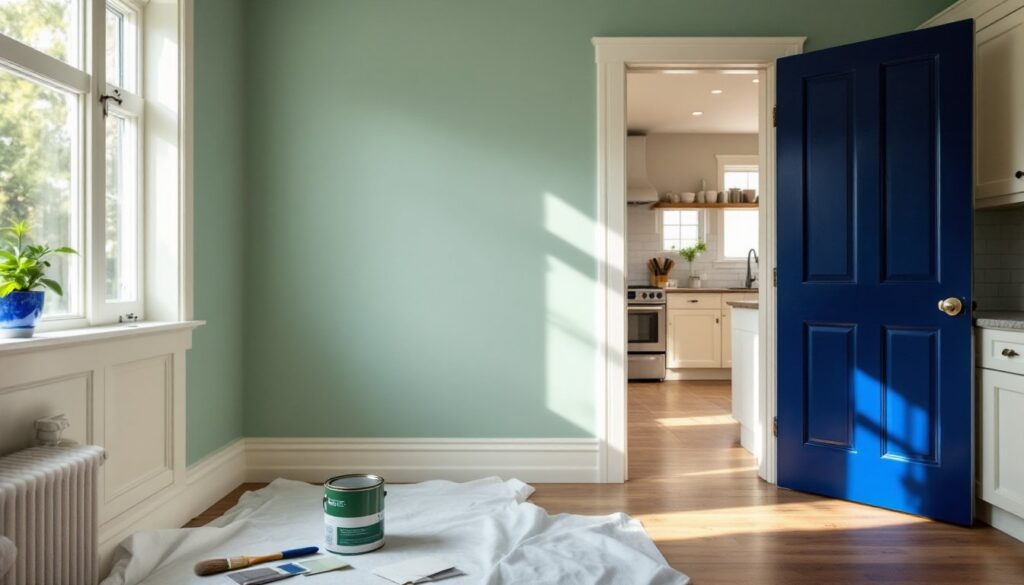
Paint is the workhorse of budget renovation. A fresh coat transforms walls, ceilings, and trim faster and more affordably than almost any other project. Quality matters here, cheap paint often requires three coats instead of two and may not adhere properly. A mid-range latex paint (around $25–40 per gallon) covers approximately 350 square feet and typically lasts 10+ years indoors.
Before painting, prep work is non-negotiable. Fill nail holes with spackling compound, sand glossy surfaces lightly to improve paint adhesion, and protect floors with drop cloths. Prime any new drywall patches or stains, primer stops bleed-through and improves final coverage. For interior walls, one coat of primer plus two finish coats usually suffices.
Hardware swaps pair perfectly with fresh paint for amplified impact. Replacing cabinet knobs, drawer pulls, light switch plates, and door handles takes minutes but catches the eye immediately. A set of 25 cabinet pulls costs $15–50 depending on finish. Choose brushed nickel, matte black, or satin brass for timeless appeal over trendy finishes that date quickly. This small investment works equally well in kitchens, bathrooms, and bedrooms.
Update Flooring with Low-Cost Alternatives
Full flooring replacement eats budgets fast, but several affordable options deliver visual impact without the cost. Vinyl plank flooring (often called LVP) has come far in appearance and durability over the past decade. Prices range from $2–8 per square foot installed, compared to $8–15+ for solid hardwood. LVP resists moisture, doesn’t require acclimation time like real wood, and installs over existing surfaces in many cases, no removal costs.
For renters or temporary spaces, peel-and-stick vinyl tiles offer even lower commitment. At $1–3 per square foot, they’re ideal for bathrooms, entryways, or laundry rooms. Preparation is critical: clean and level the existing floor thoroughly, or adhesion fails. Some homeowners use them as budget-friendly alternatives while saving for permanent upgrades.
Laminate remains a budget standby at $3–7 per square foot installed. It mimics wood convincingly and handles foot traffic well, though it won’t tolerate standing water like vinyl does. For kitchens near sinks or bathrooms, vinyl outperforms laminate.
Before ordering, measure carefully and add 10% waste for cuts and mistakes. Acclimate materials indoors for 48 hours if manufacturer instructions call for it, this prevents expansion gaps after installation.
DIY Kitchen and Bathroom Upgrades
Kitchen and bathroom updates command high ROI in home remodeling ideas on a budget because they’re heavily trafficked, frequently used spaces. Cabinet refinishing costs a fraction of replacement. Strip, sand, prime, and paint existing cabinetry for $200–500 in materials versus $3,000–10,000 for new units. Use cabinet-grade enamel paint (semi-gloss or satin) for durability and easy cleaning.
Countertop overlays and resurfacing extend the life of existing counters. Laminate sheet goods run $15–40 per linear foot installed with new edge banding. Alternatively, contact paper or adhesive film ($20–50 per roll) gives a temporary refreshed look while you save for permanent solutions.
Faucet replacement is a weekend DIY for anyone comfortable with a wrench. Shut off the water supply, remove the old unit, and install the new one, installation videos abound. Expect $100–300 for a reliable, mid-range faucet. Self-closing mechanisms reduce water waste and improve durability compared to budget options.
In bathrooms, new vanities range from $150–500 for quality units with integrated sinks and faucets. Regrout tile with epoxy grout rather than replacing, clean grout lines thoroughly, and they look newly renovated for under $100 in materials and labor hours. Caulk silicone joints annually to prevent mold and water intrusion.
Always check local plumbing codes before attempting water supply or drain work, some jurisdictions restrict unlicensed DIY plumbing. When in doubt, hire a licensed plumber for $100–150 per hour rather than create an expensive leak.
Maximize Curb Appeal on a Shoestring Budget
The exterior is the first impression. High-impact curb appeal projects cost surprisingly little yet influence buyer perception and neighborhood standing. A fresh coat of exterior paint ($30–60 per gallon) covers roughly 250–300 square feet per gallon on rough siding: plan for 5–8 gallons for an average home exterior. Quality exterior acrylic latex resists fading and weather better than budget grades.
New front door hardware, handle, deadbolt, kick plate, and hinges, refreshes an entry for $50–150. If the door itself is dated, painting it a bold color (navy, forest green, or charcoal) costs under $30 in paint and transforms the facade instantly.
Landscaping doesn’t require money, just elbow grease. Mulch beds ($30–60 per yard of bulk mulch), fresh mulch applied 2–3 inches deep, and organized plantings (perennials from discount nurseries are cheaper than annuals) improve appearance dramatically. Remove dead branches, trim overgrown shrubs, and edge beds to define the landscape, these tasks cost nothing but labor.
Lighting upgrades add safety and drama. LED path lights ($10–20 each) and a low-voltage lighting kit ($100–200) illuminate walkways and accent landscaping with minimal wiring, no electrician required for low-voltage systems. Solar options eliminate trenching costs entirely, though they’re brightness-limited.
Pressure wash driveways, siding, and deck surfaces. Equipment rental runs $40–80 per day: results rival a $500+ professional service. Rent a cleaner with a surface cleaner attachment for even results and faster work on large areas.
Lighting and Fixture Replacements That Make an Impact
Lighting design rarely gets budget attention, yet proper fixtures multiply the value of other upgrades. Swapping dated can lights with modern recessed LED fixtures ($20–40 each) improves both aesthetics and energy efficiency. If existing wiring is in place, installation involves unscrewing old housings and pressing in new ones, work of 30 minutes per fixture.
Chandelier and pendant replacement is equally straightforward for a homeowner comfortable turning off a breaker. Most fixtures use standard 14/2 Romex wiring: swap the old fixture for the new one by disconnecting ground, neutral, and hot wires, then reconnecting to the new unit. Follow manufacturer instructions and verify polarity, neutral (white) to neutral, hot (black) to black, ground (bare copper) to ground. If the home has knob-and-tube wiring or you’re unsure about electrical safety, hire a licensed electrician ($150–300 per fixture).
Dimmer switches and smart bulbs add function without major expense. A dimmer switch ($15–30) and compatible LED bulb ($5–15) let homeowners adjust ambiance and reduce energy use. Smart bulbs with app control cost more ($20–50) but offer color-changing and scheduling features.
Under-cabinet and task lighting in kitchens highlight countertops and prep areas. LED strip lights ($20–50 per kit) adhere to cabinet undersides and connect to low-voltage supplies, no rewiring required for plug-in models. They’re affordable, energy-efficient, and transform functional space into feature.
Upcycling and Repurposing Existing Materials
Salvage and repurpose before discarding. Old solid-wood furniture becomes floating shelves, entryway benches, or kitchen islands with strategic cuts and mounting hardware. Reclaimed door panels convert to accent walls or barn doors: a track system ($50–150) and hardware enable DIY barn door installation over an existing opening in under a day.
Original hardwood flooring hidden under carpet sometimes exists in older homes, remove carpet and padding, then sand and refinish existing floors for $1–3 per square foot in materials. Renting a floor sander costs $40–70 per day: the labor is significant but saves thousands compared to new flooring.
Tile and brick salvage from local demolition contractors or Habitat for Humanity ReStore locations offer authentic, weathered materials at 50–70% below retail. Use them for fireplace surrounds, accent walls, or backsplashes. Mortar removal takes time but reduces material costs dramatically.
Secondhand fixtures, cast-iron sinks, clawfoot tubs, light fixtures, and hardware, populate estate sales, online marketplaces, and architectural salvage yards. A vintage cast-iron sink costs $100–300 used versus $400–800 new and adds character. Verify plumbing compatibility and condition before purchasing, and budget for professional installation if required.
Free or low-cost sources include curbside pickups in affluent neighborhoods, demolition sites (with owner permission), and community swap groups. Inspect for damage, test functionality, and clean thoroughly before integration into renovation plans.
Conclusion
Budget renovation isn’t about choosing between results and affordability, it’s about choosing wisely. Targeting cosmetic upgrades like paint, hardware, lighting, and flooring delivers visible transformation without permits or structural complexity. Paired with strategic curb appeal work and intelligent upcycling, homeowners execute room-by-room improvements that compound over time. The most expensive renovation is often the one that never starts because the budget seemed unrealistic. Begin small, learn by doing, and reinvest savings into the next project. A home built piece by piece rewards patience and smart planning far more than a single expensive overhaul.