
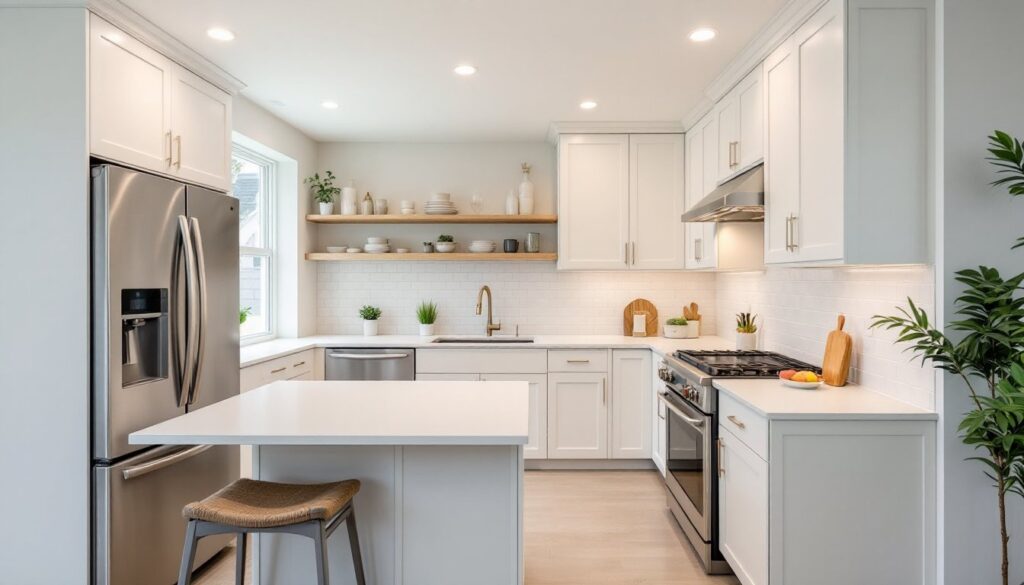
A 12×12 kitchen, roughly 144 square feet, is a common footprint in apartments, condos, and starter homes. It’s tight, but far from hopeless. The trick isn’t squeezing everything in: it’s choosing a layout that puts the most-used appliances and storage within arm’s reach while keeping traffic flow clear. Whether someone’s starting from scratch or rethinking an existing galley or L-shaped setup, understanding the layout options, and how to optimize each one, makes the difference between a cramped, frustrating kitchen and one that feels spacious and functional. This guide walks through the best 12×12 kitchen layouts, storage tricks, and design moves that actually work in tight quarters.
Key Takeaways
- A 12×12 kitchen layout works best when the work triangle connecting the sink, stove, and refrigerator stays compact at 13–26 feet of perimeter, keeping appliances within arm’s reach.
- Galley layouts maximize efficiency in tight spaces with parallel walls and a 36–42 inch walkway, while L-shaped layouts offer flexibility and naturally accommodate two cooks without interference.
- Vertical storage, deep drawers, pull-out pantries, and corner pull-outs are essential for maximizing the 144 square feet of floor space without adding a full walk-in pantry.
- Open concept designs that remove or lower non-load-bearing walls make a 12×12 kitchen feel larger, but require downdraft cooktops or high-powered ventilation to avoid spreading cooking odors.
- Task lighting under cabinets, ambient recessed ceiling lights, and light-colored finishes are the most cost-effective ways to make a small kitchen feel spacious and functional.
- Smart 12×12 kitchen layout planning means measuring twice, keeping traffic flow clear, and choosing designs that eliminate wasted corner space while prioritizing ease of movement.
Understand Your 12×12 Kitchen Dimensions and Constraints
Before picking a layout, measure twice and account for what’s already there. A 12×12 kitchen offers roughly 144 square feet of floor space, but appliances, doorways, and windows eat into that fast. A standard refrigerator is about 3 feet wide: a cooktop or range takes up 2.5 to 4 feet: a sink base cabinet runs 30 to 36 inches.
Measure the actual floor space available for the work triangle, the imaginary line connecting the sink, stove, and refrigerator. In a small kitchen, this triangle should be compact (ideally 13 to 26 feet of total perimeter), so no one’s running marathons between appliances.
Note where doors swing open, if there’s a window wall, and whether any walls are load-bearing (important if someone’s planning to open up space later). Check ceiling height, existing electrical outlets, and whether plumbing is fixed or movable. A corner stove is harder to access: a corner sink wastes corner storage. These constraints will nudge the layout in one direction or another.
The Galley Kitchen: Efficiency Meets Functionality
A galley layout runs two parallel walls of cabinetry and appliances, with a walkway in between, usually 3 to 4 feet wide. It’s the most efficient layout for a 12×12 space because the work triangle is tight and everything is within reach.
Ideal placement: Put the sink on one wall, the cooktop on the opposite wall, and the refrigerator at the end of one run. This spreads out the heat and sinks, reducing cross-traffic. The walkway becomes the workspace: keep it clear.
The trade-off: Only one person works comfortably at a time, and it can feel like a bowling alley if it’s too narrow. To avoid that, don’t skimp on the walkway width, 36 inches minimum, 42 inches better. Use light cabinetry colors (whites, soft grays) and reflective hardware to make it feel less tunnel-like. Open shelving on one wall instead of upper cabinets can also brighten the space and make it feel less boxed in. A galley kitchen maximizes storage and is the fastest to prep in if someone’s cooking solo.
The L-Shaped Layout: Maximize Corner Space
An L-shaped layout puts cabinetry and appliances on two adjacent walls, usually with a corner sink or an open corner. It’s more flexible than a galley and works well in 12×12 kitchens that have a window or door breaking up one side.
Common configuration: Sink on the longer wall, cooktop at the corner or on the short wall, refrigerator at the end. This spreads the work triangle nicely and allows two people to cook without bumping elbows. The open side of the L stays clear for traffic or a small island (if space permits).
Corner management is key. A corner sink is convenient and doesn’t waste the corner, but corner cabinetry can be hard to access, items get lost in the back. Install a lazy Susan or pull-out shelving system in corner base cabinets to make deep corners usable. A corner cooktop is trickier (safety, ventilation, access), so most people avoid it. The L-shape naturally leaves room to add a small table or bar-height peninsula later, which works great for eating and extra prep space without blocking the kitchen triangle.
Open Concept Design: Creating Flow and Light
If the 12×12 space opens into a living or dining area, an open concept kitchen can feel much larger. Removing or lowering a wall (if it’s non-load-bearing) lets sightlines stretch and daylight spread.
Key moves: Use the end of the kitchen where it meets the living space for a peninsula or island instead of a solid wall of cabinetry. A 24- to 30-inch-deep island with seating on one side doubles as counter workspace and gathering spot, and it doesn’t block the kitchen work zone. Keep upper cabinetry over the island minimal, nothing taller than 36 inches, so someone can see over it and the space doesn’t feel cramped.
Ventilation becomes crucial in an open layout. A traditional range hood vents smell and steam into the adjacent room, so switch to a downdraft cooktop (vents below the cooking surface) or a high-powered hood with ducting to the outside. Downraft cooktops cost more but keep the sightline clear.
Color and materials matter in open kitchens. If cabinetry, countertops, and appliances are dark or busy, the space feels smaller. Stick to a consistent palette, light cabinetry, neutral countertops, stainless steel appliances, so the kitchen doesn’t dominate the open area visually.
Smart Storage Solutions for Small Spaces
Storage is the real challenge in a 12×12 kitchen. Every square inch counts, so use vertical space, inside corners, and the backs of doors.
Vertical storage: Tall cabinets (floor to ceiling, or close) eat wall space but hold far more than standard base-and-upper cabinet combos. Open shelving above the sink or stove looks airy and gives access to everyday items without opening cabinet doors.
Deep drawers instead of upper cabinets: In a galley or L-shaped layout, one wall can have deeper drawers (9 to 12 inches) instead of the usual 12-inch upper cabinets. They hold more, are easier to access, and reduce visual clutter, one pull is easier to scan than reaching into a dark cabinet.
Maximize corner cabinets: Use corner pull-outs or rotating shelves to access the back of corner spaces. A blind corner cabinet (one that backs up to a wall) wastes space: a pie-cut or kidney-shaped shelf system lets you swing out items from the deep back.
Use door backs: Inside kitchen cabinet and pantry doors, install over-the-door racks or hooks for spices, oils, or small tools. It’s real estate that’s usually wasted.
Pantry options: A walk-in pantry in a 12×12 kitchen eats 30-40 square feet, which might not leave room for an island. Instead, consider a tall pull-out pantry cabinet (20 inches wide, floor-to-ceiling) tucked beside the refrigerator, it looks like a cabinet but holds the volume of a small pantry.
Measure appliances and storage depth carefully: a standard refrigerator is 30 inches deep, wall cabinets are 12 inches deep, and base cabinets are typically 24 inches deep. Mismatched depths are a common DIY mistake that wastes space or sticks out awkwardly.
Lighting and Finishing Touches
Lighting is the cheapest way to make a small kitchen feel larger. A single overhead fixture doesn’t cut it, add task lighting, ambient layers, and bright finishes to reflect light around the room.
Task lighting: Install under-cabinet LED strips above the main countertops (directed downward onto the work surface, not upward where it glares). Above the sink, a small recessed light or pendant prevents shadows. For the stove, a range hood with integrated lighting (or a separate under-cabinet fixture) is essential for safety and visibility.
Ambient lighting: Recessed ceiling lights spaced evenly (one every 4-6 feet) provide general illumination without clutter. In an open-concept kitchen, keep the lighting consistent, don’t drop a bright fixture over the island while the rest is dim, or the transition will feel choppy.
Finishes and color: Light-colored cabinetry and countertops reflect light and make the space feel airier. Matte or soft-gloss finishes on cabinet doors read cleaner than high-gloss in small spaces (high-gloss shows every fingerprint). For countertops, white, cream, light gray, or pale quartz stretches the eye. Dark countertops or cabinets ground the space and can feel heavier.
Backsplash: A subway tile or small mosaic backsplash is functional and inexpensive. Large formats (12×12 or bigger) feel less busy than tiny tiles and require fewer grout lines (easier to clean). Subway tiles run 3×6 inches and cost $4-8 per square foot installed: they’re a safe, classic choice.
Hardware: Thin, minimalist pull handles and knobs in brushed nickel or matte black feel modern without clutter. Avoid ornate or chunky hardware in tight spaces, it adds visual weight.
Conclusion
A 12×12 kitchen is tight, but smart layout choices, strategic storage, and thoughtful lighting make it work hard. Choose a galley for pure efficiency, an L-shape for flexibility and gathering, or an open concept if space adjoins a living area. Measure twice, keep traffic flow clear, and don’t waste corners or wall space. The best small kitchen isn’t the one with the most stuff, it’s the one where everything has a place and the person cooking can move freely.