
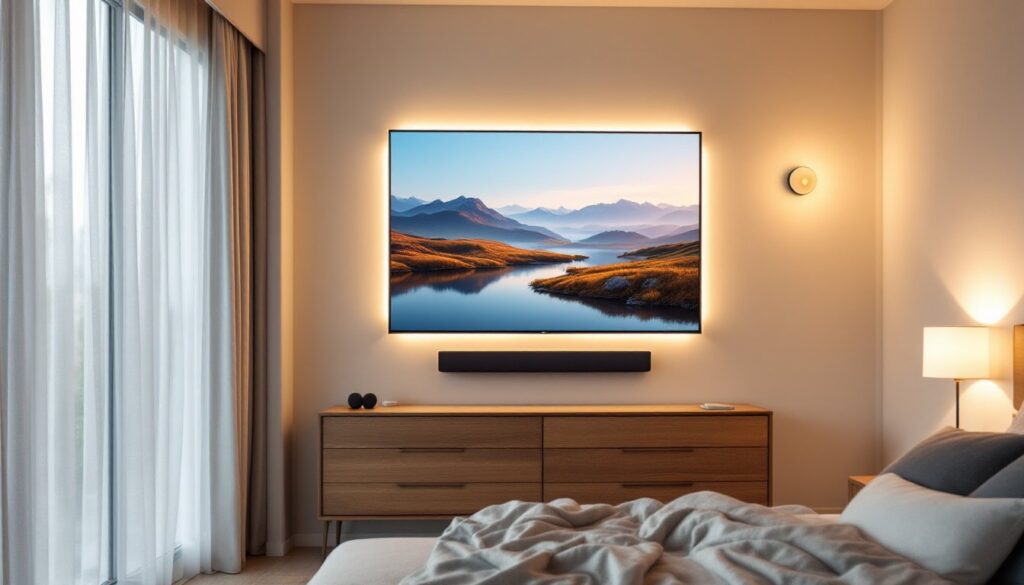
A bedroom TV setup can transform a personal retreat into an entertainment haven, or it can feel awkward and cramped if done wrong. The key is balancing aesthetics with functionality: mounting height, viewing distance, cable clutter, and room lighting all play a role. Unlike a living room where a TV is the focal point, a bedroom needs a more nuanced approach. This guide covers the practical decisions that turn a simple TV placement into a thoughtful installation that works for both late-night viewing and morning coffee scrolling. Whether building from scratch or upgrading an existing setup, these core principles apply to any budget and style.
Key Takeaways
- Choose a bedroom TV size between 43″ and 65″ based on viewing distance—divide your seating distance in feet by 1.5 to 2.5 to find the optimal screen diagonal.
- Mount your TV at eye level (42–48″ from the floor) facing the bed directly to avoid neck strain and ensure comfortable reclined viewing.
- Wall mounting provides a cleaner look but requires proper stud anchors, while furniture placement offers flexibility and easier cable management with the tradeoff of floor space.
- Use bias lighting with LED strips behind the TV and warm-white dimmable bulbs to reduce glare and eye fatigue during late-night viewing.
- Add a soundbar or small 2.1 speaker system mounted below or above the TV to improve dialogue clarity, since built-in TV speakers are weak and rear-facing.
- Manage cables with in-wall conduit, adhesive cable channels, or media console routing holes to maintain a clean bedroom aesthetic that supports relaxation.
Choosing the Right TV Size and Placement
Bedroom TVs are typically smaller than their living room counterparts, think 43″ to 65″ rather than 75″ or larger. The viewing distance matters more than raw screen size. As a rule of thumb, sit your projected viewing distance in feet and divide by 1.5 to 2.5 for an optimal screen diagonal in inches. A 10-foot viewing distance works well with a 50″ TV: if you’re 8 feet away, a 43″ feels right. Go too big and you’ll need to whip your head side to side like watching tennis.
Placement depends on room layout. The TV should face the bed directly, not at an angle that strains your neck. If mounting on a wall, the center of the screen should be roughly at eye level when you’re sitting upright in bed, about 42″ to 48″ from the floor. If using a dresser or stand, similar logic applies. Avoid corners unless you have a pivoting mount: a corner TV feels isolating and creates glare issues from windows. Take time measuring your room and sketching sight lines before committing to any hardware.
Wall Mounting vs. Furniture Placement: Pros and Cons
Wall mounting saves floor space and looks cleaner, but it’s permanent. You’ll need to locate wall studs (vertical framing members 16″ or 24″ apart) and use proper anchors rated for your TV’s weight. A stud finder makes this easy: just remember that drywall anchors alone won’t hold a 55″ TV safely, you need lag bolts or heavy-duty anchors into the studs themselves. Drilling into studs also means navigating potential plumbing or electrical runs behind the wall: when in doubt, use a stud finder with electrical detection or call a pro. Wall mounts ($40–200) range from fixed brackets (cheapest, no adjustment) to full-motion mounts (pricier, but allows tilting and swiveling).
Furniture placement (dresser, TV stand, or media console) offers flexibility: you can move it, adjust height, and hide components easier. The tradeoff is floor space and the risk of tipping if not anchored. If you have kids or pets, anti-tip straps that bolt the stand to wall studs are essential, TVs are heavy and top-heavy furniture is a genuine hazard. Stands also tend to gather dust and cable clutter underneath, so factor in regular cleaning.
Creating the Perfect Viewing Angle and Distance
The sweet spot for bedroom viewing is a reclined position, you’re lying or propped up in bed, not sitting upright like in a living room. This changes the math slightly. If your TV is wall-mounted, angle it down a few degrees so you’re not looking straight at it or craning your neck backward. Most full-motion mounts allow 15° of tilt, which works well. Measure from your usual viewing position (centered in the bed) to the TV screen, then back up one step to confirm it’s not too close.
Neck strain and eye fatigue are real concerns in bedrooms. The further back you sit, the lower the perceived refresh rate and color accuracy seem, so don’t overshoots distance either. A 43″ TV typically works best at 6–8 feet: a 55″ at 8–10 feet: a 65″ at 10–12 feet. If you’re between sizes, go smaller, it’s easier to sit forward six inches than to deal with eye strain from an oversized screen. Also consider if you’ll be viewing from the side of the bed: if so, a slight pivot or articulating mount is worth the extra $30–50 upfront.
Cable Management and Concealment Solutions
Cables are the enemy of a clean bedroom aesthetic. In-wall conduit (plastic or metal tubing that runs through walls) is the gold standard but requires cutting drywall and is semi-permanent. If the TV is wall-mounted and the power outlet is nearby, this is doable, just run the HDMI, power, and any antenna cables through the conduit. Many DIYers prefer less invasive routes: cable channels (adhesive or screw-mounted raceways that run along the baseboard or wall) hide cords and look intentional.
For a furniture setup, a media console with a back panel or routing holes keeps cables contained underneath. Velcro cable ties and cable clips (small adhesive or screw-on holders) organize runs neatly. Label each cable at both ends with tape so swaps are painless. Keep spare HDMI and power cables in a drawer, bedroom entertainment setups often expand (adding a soundbar, streaming device, etc.), so plan for slack. Avoid daisy-chaining power strips: use a properly rated surge protector with individual outlet switches to safely control multiple devices.
Lighting and Ambiance for Comfortable Viewing
Direct light on the TV screen causes glare and eye strain. Overhead ceiling lights should be dimmable or off during viewing, invest in a dimmer switch (a $15 swap for an existing switch) if you don’t have one. The best bedroom TV lighting is bias lighting: LED strips mounted behind the TV that illuminate the wall, creating contrast so your eyes adjust more evenly. These run $20–50, stick on easily, and make late-night viewing noticeably more comfortable.
Layered lighting works: an overhead (dimmed), bedside lamps (warm bulbs, turned away from the screen), and subtle accent lighting around the TV. Avoid cool-white or daylight bulbs near the TV, warm white (2700K or lower) is more restful and pairs better with most content. If you’re a morning news watcher, sheer curtains reduce window glare without full blackout. Smart bulbs add convenience, but don’t overcomplicate, a manual dimmer and a couple of warm lamps do the job well.
Sound System Options and Placement Strategies
Built-in TV speakers are weak and rear-facing, making dialogue hard to hear while lying down. A soundbar ($100–300) mounted directly below or above the TV solves this without clutter. Look for one with a center channel emphasis (prioritizes dialogue) and wall-mount brackets so it’s out of the way. Avoid bars wider than your TV, it looks awkward and provides no real benefit.
If you want fuller audio, a small 2.1 system (left/right speakers plus a subwoofer) works without the complexity of surround sound. Place speakers on stands or shelves flanking the TV and tuck the subwoofer in a corner or under the bed. Bluetooth or WiFi connectivity (like AirPlay or HDMI-CEC) keeps wiring minimal. A powered soundbar or active speakers (with built-in amplifiers) simplifies setup compared to passive speakers requiring a separate receiver. Budget-conscious? Even a $60 soundbar beats TV speakers and takes 15 minutes to install.
Conclusion
A bedroom TV setup succeeds when it fades into the room except when you’re using it. Right-sizing the screen, mounting thoughtfully, managing cables, controlling light, and adding decent audio cover the essentials. Take your time with measurements and planning, studs are easier to find before you drill, and cables are simpler to hide before they’re installed. Most of these projects are weekend work, not professional territory, so don’t hesitate to tackle them yourself. The result is a personalized retreat that supports both relaxation and entertainment.