
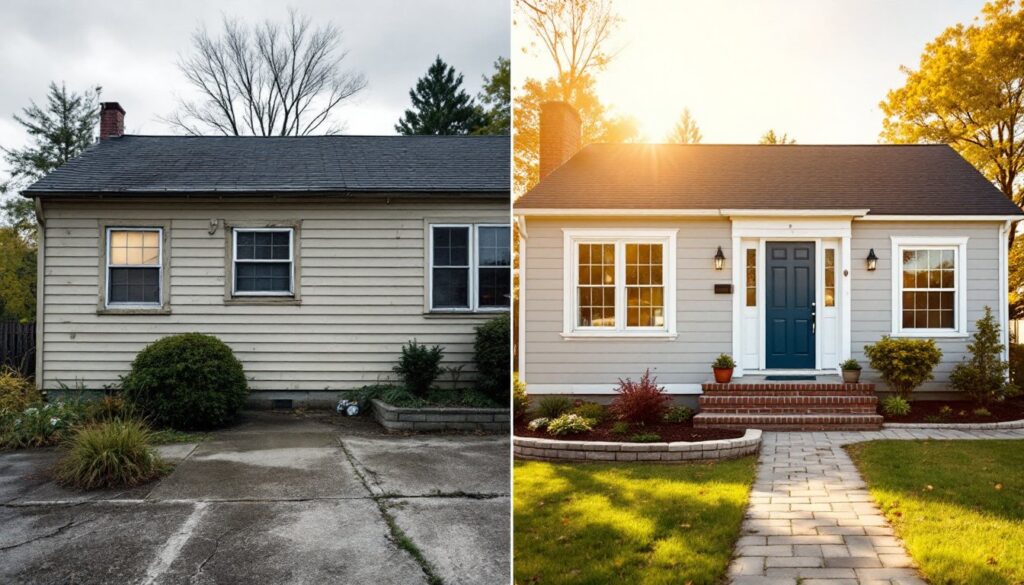
A tired front entrance, weathered siding, and overgrown landscaping can make even a well-maintained house feel neglected. The good news: an exterior home remodel doesn’t require gutting the entire property. Strategic updates to roofing, siding, landscaping, and entry features can transform a property’s appearance in weeks rather than months. Homeowners who invest in exterior home renovation ideas and exterior home remodel ideas see immediate returns in curb appeal and, often, resale value. This guide walks through seven real-world before-and-after transformations, explores what makes exterior updates tick, and shows how to plan a remodel that fits your budget and timeline.
Key Takeaways
- Homeowners recoup 70–80% of exterior home remodel costs at resale, making it one of the highest-ROI home improvement investments compared to interior updates.
- Siding and roof replacements deliver the most dramatic visual impact, with roofing costs ranging from $8,000–$15,000 for average homes and instantly transforming curb appeal.
- Strategic landscaping and hardscaping overhauls can refresh a property for $2,000–$5,000 with modest DIY-friendly work, creating visual order and extending living space.
- Prioritize structural repairs like roof and siding first before cosmetic updates, and always obtain permits for major work to ensure code compliance and protect your investment.
- Coordinate exterior colors and materials for cohesion—match siding tones with complementary roof colors and landscape elements to avoid costly surprises and maintain visual harmony.
- Plan your exterior home remodel timeline around weather conditions, tackling roofing and siding in spring or fall, and staggering projects across years if budget constraints exist.
Why Exterior Remodels Deliver the Highest Return on Investment
Exterior home remodels consistently rank among the highest-ROI home improvement projects. According to industry data, homeowners recoup 70–80% of exterior renovation costs at resale, compared to 50–60% for many interior updates. Why? Curb appeal is the first impression, and it matters.
A fresh exterior signals maintenance and care. Potential buyers make judgments within seconds of pulling into a driveway. Peeling paint, sagging gutters, or broken siding scream deferred maintenance, even if the home’s bones are sound. Conversely, a clean roof, updated siding, and manicured landscaping suggest a property worth the asking price.
Beyond resale, exterior updates improve daily living. A new front door creates a welcoming entry. New siding reduces maintenance and energy costs. Hardscaping transforms unused yard space into functional outdoor rooms. These projects blend aesthetic gain with practical benefit, a rare combination in home improvement.
Common Exterior Updates That Make the Biggest Visual Impact
Not all exterior work carries equal visual weight. The most transformative updates focus on what people see first.
Siding and Roofing Replacements
Siding replacement is perhaps the single most visible exterior project. Fading, warping, or missing panels instantly age a home. Modern fiber cement board, vinyl, or composite siding comes in dozens of colors and textures, many mimicking wood without the maintenance burden.
Roofing replacements are equally dramatic. A 30-year-old asphalt shingle roof often shows streaking, missing granules, or curled edges. Upgrading to architectural shingles (layered, dimensional asphalt) or impact-resistant material adds visual depth and signals durability to viewers. Roof color choices, dark charcoal, warm brown, or slate gray, dramatically shift a home’s character. Installation typically requires professionals and a permit: expect costs between $8,000–$15,000 for an average home, depending on material and local labor rates.
Siding installation also warrants professional work, though prep, removing old siding, inspecting sheathing, installing house wrap as a moisture barrier, can be a DIY task if you’re handy. Always check local building codes: some jurisdictions mandate sealing transitions at windows, doors, and foundation to prevent water intrusion.
Landscaping and Hardscaping Overhauls
Landscaping transforms a property with minimal structural work. Removing overgrown shrubs, adding mulch beds, planting ornamental trees, and edging creates visual order. Hardscaping, patios, walkways, retaining walls, extends living space and defines the property’s bones.
A common before-and-after scenario: an empty, weed-choked front yard becomes a tiered landscape with a gravel or permeable paver pathway, layered plantings (tall ornamental grasses in back, shrubs mid-level, perennials in front), and a small sitting area. Cost varies wildly by region and scale, but a modest front-yard refresh, plants, mulch, edging, and a simple walkway, runs $2,000–$5,000 for DIY-friendly work.
Hardscaping requires more skill. A paver patio needs proper grading, compacted base material (typically 4 inches of crushed stone), sand leveling, and careful joint work. Retaining walls, especially those over 4 feet, may require engineering and a permit. Poorly installed hardscaping fails in one or two seasons as frost heave and settling shift pavers and crack walls.
How to Plan Your Exterior Remodel Project
Before breaking ground, establish priorities, budget, and timeline.
Start with assessment. Walk your property and photograph problem areas. Note which exterior elements draw the eye (front door, roof line, landscaping). Inspect foundations, siding, flashing, and gutters for water damage or rot. Rot in soffit, fascia, or underlying wood frames means structural repair before cosmetic updates, a sobering reality that derails many projects.
Set a budget and prioritize. Roof and siding replacements are expensive but necessary if damaged: treat them as non-negotiable. Landscaping and minor details (painting, new hardware, entry lighting) offer quick wins at lower cost. Many successful remodels tackle big structural work first, then layer cosmetic updates.
Obtain permits. Major work, including roofing, siding, structural repairs, and hardscaping walls, requires permits in most jurisdictions. Permitting adds 2–4 weeks and 5–15% to project cost, but it protects you if issues arise and ensures work meets code. For larger projects, arranging necessary site services such as toilet rentals can also help keep workers and the job site comfortable and organized. Inspectors verify proper flashing, load-bearing, grading, and safety standards.
Hire strategically. Roofing and siding installation are specialized trades: most DIYers shouldn’t attempt them. Landscaping and simple hardscaping (mulching, planting, building small borders) suit DIY if you’re comfortable with basic tools. Paint prep and exterior painting are medium-skill tasks: hiring a painter for trim and siding is often worth the cost.
Create a timeline. Weather matters. Roofing and siding work best in dry seasons: spring and fall are ideal in most regions. Landscaping can happen year-round, but spring and fall soil is easiest to work. Stagger projects if budget is tight: year one might be roofing and siding, year two landscaping and hardscaping.
Coordinate materials and finishes. Exterior color palettes should feel cohesive. If updating siding to a light gray, choose a roof color that complements (charcoal, bronze, or dark gray often work). Landscape plantings and hardscape paver colors should echo or accent the home’s palette. Samples in sunlight, not showrooms, prevent costly surprises.
Conclusion
Exterior home remodel projects deliver measurable returns in curb appeal, property value, and daily enjoyment. Whether tackling siding, roofing, landscaping, or a combination, success hinges on honest assessment, clear prioritization, and realistic expectations about skill and timeline. Start with visible, high-impact updates, a new roof, fresh siding, and thoughtful landscaping, and layer in details as budget allows. With planning and the right help, a tired exterior becomes a point of pride.