
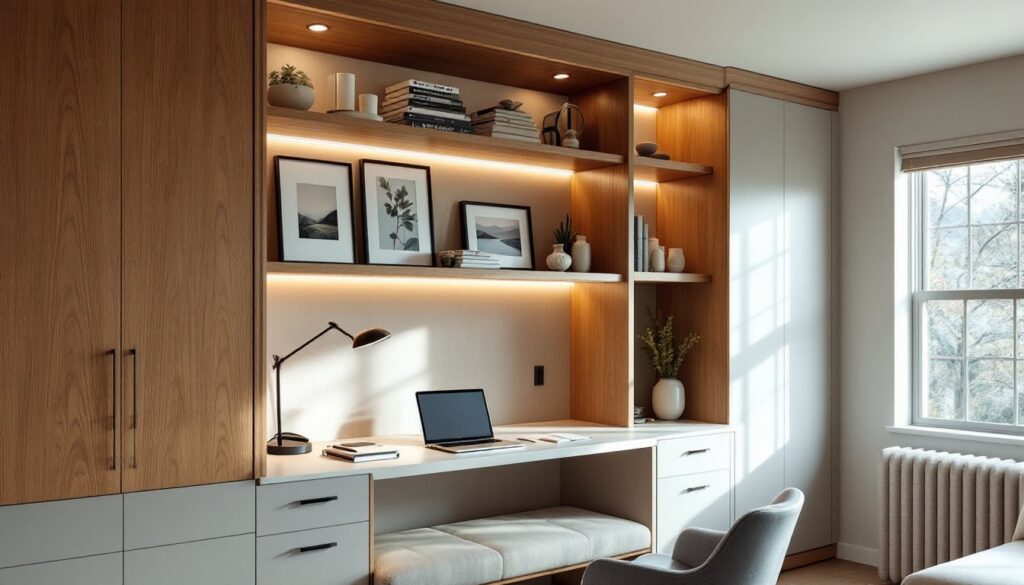
A dedicated home office needs more than a desk shoved in the corner. Smart built-in solutions maximize functionality, minimize clutter, and create a workspace that works as hard as you do. Whether you’re dealing with a cramped spare bedroom or reclaiming part of the living room, custom shelving, integrated desks, and strategic storage transform an ordinary room into a productive zone. The best part? Many of these projects don’t require a contractor, just solid planning, basic carpentry skills, and the right approach to materials and layout.
Key Takeaways
- Wall-mounted custom shelving and cabinetry secured with French cleats maximize storage while keeping floor space free for movement and functionality in your home office built-in design.
- Wall-mounted desks measuring 24–30 inches deep save square footage while providing an ergonomic workspace; ensure at least 18–24 inches of clearance between desk surface and shelving above for proper monitor height.
- Built-in partitions or room dividers using frame-and-panel construction create psychological separation and reduce distractions when your home office shares space with other rooms.
- Integrate electrical outlets, power solutions, and task lighting into built-ins before installation; position outlets 18–24 inches above floor and plan for one outlet every 6 linear feet per NEC requirements.
- Multi-functional built-in seating with hinged storage tops and cushioning provides extra workspace and project material storage while doubling as a guest seating or rest area.
Maximize Storage With Custom Shelving and Cabinetry
Open shelving and cabinetry built directly into walls are game-changers for home offices. Unlike freestanding bookcases that eat up floor space, wall-mounted shelves keep your square footage free for movement and breathing room.
Start with 1×12 or 1×10 solid wood boards (actual depth 11.5″ or 9.5″) mounted on French cleats, a pair of 1×4 boards cut at 45 degrees, one attached to studs, the other to the shelf. French cleats distribute weight evenly and let you adjust height easily. Space cleats 16″ apart on center for loads up to 50 lbs per shelf.
If you’re adding cabinets, stock 24″-deep options sit flush with your desk depth, keeping everything aligned and streamlined. Paint them satin or semi-gloss, it’s durable, wipeable, and hides fingerprints better than flat finishes.
For built-in closed storage, consider 3/4″ plywood with edge banding to hide the veneer, it’s way cheaper than solid wood and just as sturdy when properly supported. Add a back panel (even pegboard works) to brace everything and prevent racking. Measure twice, anchor to studs, and check level on three planes before fastening.
Build the Perfect Desk Setup Into Your Wall
Wall-Mounted Desks for Small Spaces
A wall-mounted desk salvages precious square footage and creates a tidy, intentional workspace. Standard desk depth is 24″–30″: go with 24″ if space is tight, 30″ if you need room for a dual monitor setup or paperwork.
Build the frame from 2×4 lumber (actual 1.5″ × 3.5″), positioned horizontally and secured to studs with 3/8″ lag bolts or heavy-duty brackets rated for at least 150 lbs. Space studs are typically 16″ on center: if your wall doesn’t have studs where you need them, use heavy-duty toggle bolts or install a horizontal stringer (2×4) between studs first.
Top the frame with either 3/4″ plywood or solid hardwood, birch or pine work fine and take stain or paint well. Add a finished edge using iron-on edge banding or solid trim to hide the plywood’s layered look.
Incorporate a knee recess (the gap between desk and wall) at least 15″ high and 12″ deep so you don’t bang your legs. If you’re pairing the desk with shelving above, leave at least 18″–24″ clearance from desk surface to bottom shelf for monitor height and ergonomics.
This approach works especially well in guest rooms, dens, or hallway nooks where a traditional desk won’t fit.
Create Dedicated Zones With Partitions and Room Dividers
If your home office shares space with a bedroom, living room, or nursery, a built-in partition or divider carves out psychological separation and cuts down visual and acoustic distractions.
A simple frame-and-panel setup uses 2×2 uprights (actual 1.5″ × 1.5″) anchored top and bottom, filled with 1×6 tongue-and-groove boards or shiplap running horizontally. This looks intentional, adds texture, and costs less than drywall plus tape and mud.
Alternatively, build a stud frame and fill it with acoustic panels or fiberglass insulation wrapped in fabric. Drill small holes through the frame’s face, apply Velcro strips, and swap panels seasonally or for aesthetics. This also dampens sound, crucial if you’re on video calls all day.
Height matters: a waist-height divider (42″–48″) blocks sightlines without cutting off the room’s airflow or making it feel caged in. A full-height partition (8 feet) is more dramatic but requires floor bracing and may need building permits, depending on your jurisdiction.
For renters or those not ready for permanent carpentry, a track-mounted sliding divider (like barn door style) offers flexibility. It still anchors to studs or ceiling, but installation is simpler and removal less destructive.
Integrate Lighting and Power Solutions Seamlessly
Poor lighting and hunting for outlets kills productivity. Plan electrical and lighting into your built-ins from the start.
Run power before walls go up. If you’re building shelving or cabinetry on an outside wall, fish new cable through the stud cavity to a new outlet box (or multiple boxes) positioned at desktop height, 18″–24″ off the floor is standard. Follow NEC (National Electrical Code) rules: most areas require an outlet every 6 linear feet. Use 12-gauge wire and 20-amp circuits for office equipment: 14-gauge and 15 amps work for lighting only.
For existing walls, surface-mounted raceway (also called wiremold) routes power and data cleanly along the wall face. Paintable or stained wood alternatives blend in better than metal.
Lighting goes overhead and at the task level. Recessed cans or a slim ceiling-mounted LED fixture handle ambient light. For task lighting, desk lamps with adjustable arms (articulating or swing-arm types) reduce glare on screens and provide focused light where you actually work.
Add LED strip lighting along the underside of upper shelves to illuminate the desktop below. Choose warm white (2700K–3000K) for a comfortable, productive feel. All LEDs last 25,000–50,000 hours, so don’t skimp, quality ones adjust color temperature and run on a simple dimmer.
Design Multi-Functional Built-In Seating
Built-in benches or window seats do double duty: extra workspace, storage underneath, or a comfortable spot to read specs while designing layouts.
Construct a bench frame from 2x4s, keeping it 18″–20″ tall (standard seat height). Incorporate a hinged top or flip-top lid so the storage cavity underneath holds files, project materials, or seasonal decor. Use 3/4″ plywood for the bottom of the cavity and support it on cleats so it doesn’t sag, rule of thumb: support every 16″ of span.
Top the bench with a cushion (at least 4″ thick, wrapped in durable fabric). This turns it into a perch for brainstorming sessions or informal video calls. Some builders add a hinged backrest panel (padded or upholstered) for extra comfort and a finished look.
If you’re tucking the bench under a window, reinforce the window frame and bench structure, they need to support each other and resist racking from movement. Install L-brackets where bench meets wall to prevent shifting.
This works great in larger offices where you want to invite a colleague in for discussion, or in shared spaces where the bench doubles as a bed frame for guests.
Conclusion
Smart built-in solutions turn a generic room into a tailored workspace that supports focus and organization. Whether you’re adding wall-mounted shelving, integrating a desk into a corner, or creating zoned seating, the payoff is a home office that actually works. Start with storage and layout, layer in proper lighting and power, and don’t cut corners on structural support, your future self will thank you when everything stays level, anchored, and functional for years to come.