
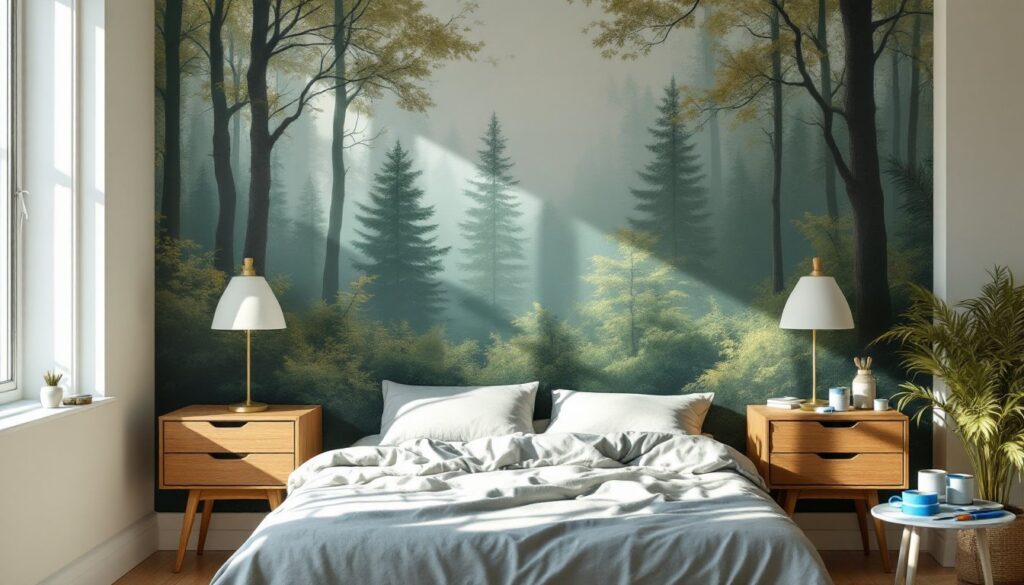
A bedroom mural does more than fill wall space, it sets the emotional tone for the room and becomes a daily visual anchor. Whether someone craves a forest canopy, a geometric focal point, or subtle minimalist lines, a well-chosen mural can transform a bland bedroom into a retreat that feels genuinely theirs. The beauty of bedroom mural ideas lies in their flexibility: they work with any budget, skill level, and design preference. This guide explores the most compelling mural styles, walks through the DIY vs. professional decision, and delivers practical advice on materials and execution so homeowners can confidently move forward with their vision.
Key Takeaways
- Bedroom mural ideas range from nature-inspired designs that promote calm to geometric and minimalist styles, allowing homeowners to create a personalized retreat within any budget and skill level.
- Nature-inspired murals with layered depth and soft earth tones work best on walls matching your room’s natural light exposure, while proper surface prep and matte finishes ensure a sophisticated, realistic appearance.
- Geometric and minimalist murals are highly achievable for DIYers—geometric work requires precision tools like laser levels and painter’s tape, while minimalist designs using line art or color washes are forgiving and budget-friendly.
- Focus accent wall murals on your room’s primary sightline (like the wall facing the bed) to create intentional focal points that save time and materials compared to full-room coverage.
- DIY bedroom mural projects cost $100–$400 in materials and typically require 3–5 days of work using methods like grid transfer or projector tracing, while professional muralists charge $500–$3,000+ for complex or photorealistic designs.
Nature-Inspired Murals for Calm and Serenity
A forest scene, mountain vista, or water feature draws the eye and quiets the mind. Nature-inspired murals work particularly well in bedrooms because they reinforce the restorative purpose of the space. Soft greens, blues, and earth tones naturally promote relaxation without requiring dramatic color shifts in décor.
Popular nature mural subjects include layered forest canopies (where trees recede into the distance), coastal scenes with gentle waves, and botanical motifs with oversized leaves or wildflowers. The key is choosing imagery with enough depth so it doesn’t feel flat or poster-like. A mural that recedes into misty background elements reads as more sophisticated and expansive than a simple silhouette.
When planning a nature mural, consider the bedroom’s existing light. A forest scene works beautifully on a north-facing wall where indirect light won’t create glare. South-facing walls can handle brighter nature themes, think sunrise skies or sun-drenched meadows. Matte or satin finishes work better than glossy for nature motifs: they avoid the plastic look that undermines realism.
Prep surfaces thoroughly before painting. Wash walls, patch holes, and prime with a quality interior primer (one gallon covers roughly 400 square feet). Uneven surfaces will telegraph through the finished mural, especially with darker colors or fine details.
Geometric and Abstract Designs for Modern Bedrooms
Sharp lines, repeating patterns, and bold color blocking create energy in a bedroom. Geometric murals appeal to modernist aesthetics and work exceptionally well on accent walls because their structure doesn’t require seamless realism, slight imperfections read as intentional.
Consider designs like chevron patterns, hexagons, minimalist mountain ranges, or abstract color washes. One trending approach: a large-scale geometric shape (a triangle or circle) anchored to a corner or the bed’s focal point, with negative space filling the rest. This creates visual interest without overwhelming the room.
For geometric work, precision matters more than artistic detail. Use a laser level and chalk line to snap reference guides. A T-square or speed square ensures clean 90-degree angles. Many DIYers choose painter’s tape to mask off sections and paint flat color fields, no brushwork finesse required, just patience and clean tape removal.
Color choice makes or breaks geometric murals. Monochromatic (single-color variations) feels sophisticated and calm. High-contrast schemes (black and white, navy and mustard) energize the space but can feel intense at night. Mid-tone combinations, sage and cream, charcoal and gold, offer balance. Test paint samples on the wall in various lighting before committing.
Minimalist Murals That Create Visual Balance
Sometimes less is more. A minimalist bedroom mural might be a single continuous line drawing, a sparse branch with a few leaves, or a gradient wash. These designs work because they add character without noise, essential in a space meant for sleep and rest.
Line-art murals (drawn in black or a dark neutral) suit bedrooms perfectly. Think single-stroke botanical outlines, geometric line constructions, or abstract flowing shapes. They’re forgiving to execute: mistakes read as artistic variation, and they don’t demand technical realism.
Color-wash murals, where two or three soft hues blend into one another without hard edges, create a mood with minimal effort. A pale blue transitioning to cream, or warm gray melting into blush, can anchor the room emotionally while staying visually restful. Use sponge techniques or a dry-brush method for soft transitions rather than hard lines.
Minimalist approaches also work well on budget-conscious projects. A quart of quality paint (roughly 100 square feet of coverage) covers small-to-medium minimalist designs. Prep and primer costs dominate the budget: the paint itself becomes secondary. Satin or eggshell finishes photograph well and hide minor imperfections better than flat paint on accent walls.
Accent Wall Murals to Define Your Style
An accent wall mural focuses visual weight on a single wall, typically the one facing the bed or a prominent wall visible from the entrance. This framing strategy makes murals feel intentional rather than arbitrary, and it saves labor and material costs compared to wrapping an entire room.
Choose the accent wall based on natural sightlines and room proportions. A wall behind the bed creates a headboard-like focal point. The wall opposite the door becomes the first thing someone sees entering. Avoid painting a wall with a window unless the mural design complements the view rather than competing with it.
Accent walls allow for bolder color or more detailed imagery. A photorealistic forest, a complex mandala, or a moody abstract piece that would overwhelm a full room instead becomes a statement without exhaustion. Lighting matters: a recessed light or wall sconce positioned above or beside an accent mural creates shadow and dimension that makes it pop.
Consider the room’s color palette when choosing an accent mural. If walls are soft white or cream, almost any mural reads beautifully. If walls are already painted a deep color, select mural tones that either harmonize or intentionally contrast. Test how the mural colors sit against existing paint before committing, samples dried on the wall show true color under actual room lighting, not artificial store displays.
DIY vs. Professional Installation: Which Is Right for You
The decision hinges on three factors: budget, complexity, and confidence. Simple geometric designs and color washes are genuinely achievable for first-time DIYers. Photorealistic scenes or intricate line work demand either experience or artistic training.
Creating Your Own Mural on a Budget
DIY murals cost $100–$400 in materials for a standard bedroom wall (roughly 80–120 square feet). Budget breaks down as: primer and paint ($40–$80), painter’s tape and supplies ($15–$25), brushes and rollers ($20–$40), and optional tools like a projector ($50–$150) or stencils ($15–$40).
Start with a clear plan. Sketch the design to scale (graph paper works, or free online tools like Procreate Dreams). Use a grid method, draw a grid on reference photo or sketch, then lightly grid the wall and transfer the image square by square. A projector (standard budget projector, $50–$100) speeds tracing significantly. Trace projected images lightly with pencil, then paint over pencil lines.
Gather the right tools: quality angled brushes for detail work, foam rollers for smooth coverage, drop cloth to protect flooring, painter’s tape (blue, not tan, it peels cleaner), and safety glasses when working overhead. Prime all walls: unpainted drywall soaks paint unevenly and can show patchy coverage.
Allow ample time and don’t rush. Most DIY murals take 3–5 full days: prep (1 day), base coats and blocking (1–2 days), detail work and touch-ups (1–2 days). Break the project into weekends if needed. Let paint cure fully between coats, check manufacturer specs, typically 2–4 hours for interior acrylics.
When to Hire a Professional Artist
Hire a professional if the design requires photorealism, intricate detail, or tight perspective work. A skilled muralist charges $500–$3,000+ depending on wall size and design complexity. Some charge by the square foot ($10–$25/sq ft for simpler work, $30–$50+/sq ft for detailed scenes).
Find muralists through local art communities, Instagram, or referrals from paint suppliers and interior designers. Review portfolios carefully, ask to see bedrooms specifically, since residential work differs from commercial or outdoor murals in scale and intimacy. Discuss timeline, paint type (ask for low-VOC or zero-VOC products), and touch-up policies before hiring.
A professional saves time and eliminates the risk of costly mistakes. They also bring experience with tricky surfaces, color matching, and techniques that flatten or expand perceived wall depth. For high-visibility walls or designs that will live in the room for years, the investment often pays dividends in satisfaction.