
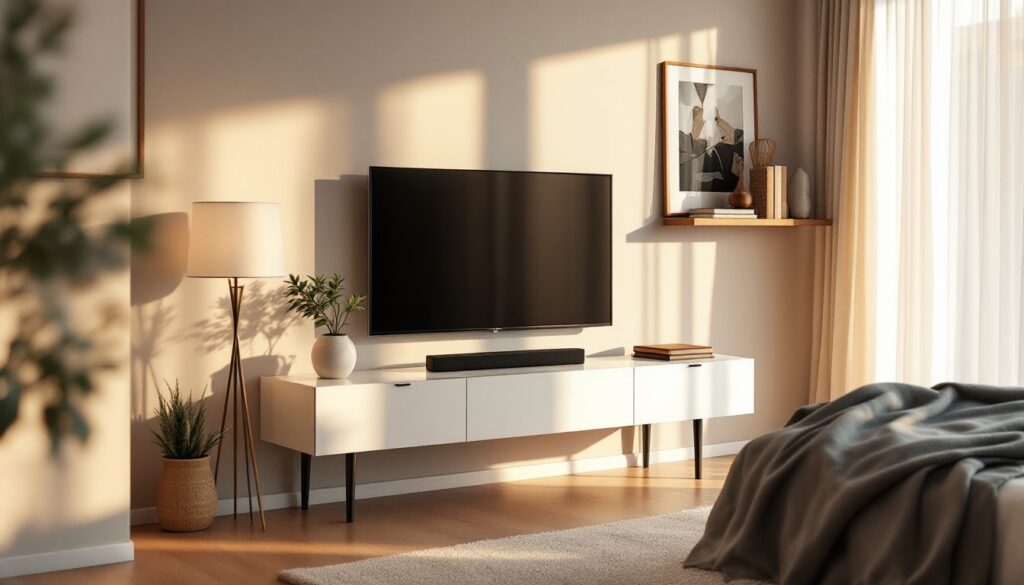
A TV stand isn’t just furniture, it’s the anchor of a bedroom’s layout and comfort. Whether someone’s upgrading a dated setup or furnishing a new room, the right bedroom TV stand balances style, functionality, and the space available. The options today go far beyond the bulky entertainment center of a decade ago. From sleek wall-mounted designs to compact solutions for tight quarters, there’s a TV stand idea suited to every aesthetic and footprint. This guide walks through five proven styles, plus styling strategies that make any TV stand look intentional and polished without overcomplicating the room.
Key Takeaways
- Modern minimalist bedroom TV stand designs feature clean lines and low profiles (48-60 inches wide, 12-18 inches tall) that don’t compete with room décor while maintaining sturdy construction for safety.
- Wall-mounted TV stands save 15-20 square feet of floor space by securing the TV directly to wall studs and pairing it with a slim floating shelf for components, making them ideal for compact bedrooms.
- Rustic and natural wood bedroom TV stand options using solid hardwoods like oak or walnut with visible joinery and durable polyurethane finishes add warmth and character while requiring careful cable management with wooden covers.
- Multifunctional storage TV stands combine closed cabinets with open shelving to hide clutter while displaying décor, with full-extension ball-bearing drawer guides and soft-close hinges for durability in smaller bedrooms.
- Proper styling elevates any bedroom TV stand by keeping 60% of surfaces clear, using cable management clips or sleeves, and adding vertical wall décor above the TV to frame it as a design element rather than an appliance.
Modern Minimalist TV Stands
Minimalist TV stands strip away excess and embrace clean lines, neutral tones, and purposeful design. These pieces typically feature a low profile, open shelving, and materials like matte black metal, white lacquer, or natural wood stained in grays and taupes. The appeal is straightforward: they don’t compete with the room: they serve the TV and let everything else breathe.
A typical modern minimalist stand spans 48 to 60 inches wide and sits 12 to 18 inches tall, leaving plenty of wall space above for visual breathing room. Pair it with a recessed shelf or floating ledge on the wall behind to hold a soundbar or decorative objects. Open shelving works well here, no cabinet doors to collect dust, though cable management matters more. Route all cords through a cable box or organize them with velcro ties behind the stand so the front stays uncluttered.
When shopping for a minimalist TV stand, look for sturdy legs (not a solid base) to maintain that airy feel, and verify the weight capacity, most bedroom TVs run 40 to 55 inches and weigh 30 to 50 pounds. Check if shelves are adjustable: this flexibility helps later if the person wants to add a sound system or a storage box. The stand should feel like it’s barely there, but the construction needs to be solid. A wobbly frame ruins the aesthetic and poses a safety risk.
Space-Saving Wall-Mounted Solutions
Wall-mounted TV stands are the space-savers of the bunch, ideal for compact bedrooms where floor real estate is precious. Instead of a traditional base, the TV attaches directly to the wall (or to a bracket anchored into wall studs), and the stand becomes a slim shelf or narrow console underneath for components and decor.
Installation is the critical part here. The TV must be anchored into studs (the vertical framing members behind drywall) spaced 16 inches apart on center in most homes. Using drywall anchors alone is not safe for a TV that weighs 30+ pounds: wall studs provide the load-bearing support required. A stud finder costs $15 to $40 and is a worthwhile investment. Locate studs, then use a heavy-duty wall mount rated for the TV’s weight and size, always buy a mount with a safety rating that exceeds the TV’s actual weight by at least 10 pounds.
The shelf below can be open (a thin floating ledge) or a small cabinet-style base. Floating shelves require brackets also anchored to studs: the deeper the shelf, the stronger the bracket must be. A 12-inch-deep floating shelf rated for 25 to 50 pounds works fine for a soundbar, small storage box, or decorative items. Before drilling, always confirm there are no electrical wires or plumbing behind the wall using an outlet finder or by checking plans if available. Wall-mounted setups save 15 to 20 square feet of floor space, a game-changer in a tight bedroom.
Rustic and Natural Wood Designs
Rustic TV stands lean into natural wood grain, visible joinery, and earthy finishes. Think reclaimed barn wood, chunky legs, open shelving, and perhaps a mix of materials like iron hardware or a concrete top. These pieces work best in bedrooms with warm color palettes and textures, think warm grays, terracotta, or soft neutrals paired with natural linens.
When evaluating a rustic wood stand, assess the wood species and condition. Solid hardwoods like oak, walnut, or cedar age beautifully and handle movement better than plywood or particle board. A quality rustic stand should show real wood, not veneers that chip easily. Check joints where legs meet the frame: they should be glued and screwed (or mortise and tenon joinery on higher-end pieces), not just stapled. Confirm the finish is a polyurethane, wax, or oil, something durable enough to withstand fingerprints and minor spills.
Rustic stands often feature open shelves, which means decor choices matter. Style the lower shelves with fabric bins, woven baskets, or small plants to break up visual clutter and add softness. The TV’s power cord and HDMI cables are visible on open shelving, so consider a wooden cable cover or sleek cable management box in black or natural wood to keep things tidy. A rustic TV stand anchors a room and works beautifully in farmhouse, cottage, or eclectic modern bedrooms.
Multifunctional Storage TV Stands
Multifunctional TV stands do heavy lifting in smaller bedrooms by combining entertainment storage with everyday organization. Drawers, closed cabinets, and cubbies hide clutter while keeping remotes, documents, and personal items within arm’s reach. These stands are taller (often 20 to 30 inches high) and deeper (18 to 24 inches), so they need adequate wall space, usually 48 to 72 inches wide depending on the design.
Look for stands with a mix of open and closed storage. A closed cabinet or drawer drawer keeps dust off electronics and hides unsightly cables, while an open shelf displays a soundbar or decorative accents. Drawers should slide smoothly on full-extension ball-bearing guides rather than cheap wooden tracks: they last longer and don’t jam. Soft-close hinges and drawer dampers prevent slamming and save wear over time, a worthwhile upgrade if available.
Before buying, count what needs to fit: a cable box, soundbar, extra controllers, chargers, throw blankets, or books. Multifunctional stands hide more than they show, so they suit busier, more eclectic bedrooms. Weight limits still matter: verify the stand’s stated capacity and don’t overload drawers. A stand filled with heavy items can become unstable or tip forward if someone sits or leans on it. Anchor tall storage pieces to the wall using a safety bracket to prevent tipping, especially in homes with children or pets.
Small Bedroom TV Stand Solutions
Tiny bedrooms demand compromise, but the TV doesn’t have to feel cramped. The key is going vertical: a narrow, tall stand, a corner configuration, or a wall-mount saves precious floor space. A stand 36 to 42 inches wide, just wider than most bedroom TVs, leaves space on either side for nightstands or doorways to function smoothly.
Corner TV stands fit snugly into room corners, angling the TV to face the bed while freeing up wall space. They’re trickier to source but incredibly efficient. If a corner stand isn’t available, a simple 36-inch-wide console with two to three shelves and minimal leg footprint works well. Leg-style bases (not a solid platform) make the stand feel less bulky visually. Avoid deep units: anything deeper than 15 inches eats into floor space.
Wall-mounting becomes even more attractive in small bedrooms. A TV mounted 48 to 60 inches from the floor (center of the TV) with a slim floating shelf below occupies almost no floor real estate. If the room has a closet or alcove, positioning the TV there creates a defined media nook without using central bedroom space. Measure sight lines carefully: a person lying in bed should view the TV comfortably at a slight downward angle. The eye height from a pillow is roughly 30 to 40 inches above the bed surface, so calculate the mount height accordingly. Test before installation if possible: some retailers let customers demo TV heights and angles in-store.
Styling Tips for Your Bedroom TV Stand
Even a solid TV stand looks incomplete without intentional styling. The space around and on the TV stand shapes the bedroom’s whole aesthetic.
If the stand has open shelves, style them with a mix of function and decor. A woven basket, a small potted plant, a stack of favorite books, and a decorative object create visual interest without looking busy. Odd numbers of objects (three plants, two books and a candle) feel more natural than paired arrangements. Keep the surfaces 60% clear: clutter kills the modern look and makes dusting a chore.
Cable management deserves its own attention. Cables draped messily undermine any TV stand, no matter how nice. Use cable clips or cable sleeves in black or white to bundle cords along the back of the stand or down the wall. Secure them with adhesive or small nails (into non-structural areas, away from studs if this is a rental). Label cables with tape or small tags so future unplugging is straightforward.
Mirrors, artwork, or floating shelves on the wall above the TV expand the visual space and frame the TV as a design element, not just an appliance. Avoid hanging anything directly above the TV that could fall if the wall shakes. Consider the TV’s power and HDMI cables: keep them routed neatly, out of sight. A dark wall behind the TV (deep gray, charcoal, or black) reduces screen glare and makes the TV pop visually. If painting isn’t an option, a fabric wall hanging or peel-and-stick wallpaper achieves the same effect.
Conclusion
The best bedroom TV stand matches the room’s style, fits the available space, and supports the TV safely. Whether that’s a minimalist floating shelf, a rustic wood base, or a multifunctional storage unit depends on personal taste and the room’s dimensions. Start by measuring the TV, confirming wall studs if wall-mounting, and honestly assessing storage needs. Then choose a stand that looks good and works hard. Done right, a TV stand becomes invisible, the room feels balanced, the TV sits at a comfortable height, and everything has its place.