Homeowners looking to refresh a deck face a critical choice: which railing system delivers both curb appeal and longevity without becoming a maintenance headache? Aluminum railings have emerged as the answer. Unlike wood, which rots, splinters, and demands annual staining, or steel, which rusts without constant care, aluminum strikes a balance. It’s lightweight, corrosion-resistant, and comes in designs ranging from contemporary glass-and-metal combos to traditional horizontal cable systems. Whether someone’s upgrading an existing deck or building from scratch, exploring aluminum railing ideas opens the door to solutions that look sharp for decades and won’t drain the wallet on upkeep. Let’s dig into why aluminum has become the go-to choice and what styles work best for different homes.
Key Takeaways
- Aluminum railings resist rust and corrosion naturally, require minimal maintenance compared to wood or steel, and remain durable in harsh coastal or wet climates for 10+ years without peeling or rot.
- Aluminum deck railing ideas include glass-panel systems for unobstructed views, horizontal cable designs for contemporary aesthetics, and mixed-material options combining aluminum with wood or composite for custom visual appeal.
- Most aluminum railing systems meet International Building Code standards (36-inch height and 200-pound horizontal load resistance), but always verify local jurisdiction requirements before installation.
- Powder-coated aluminum finishes in colors like black, white, bronze, and gray resist UV fading and chalking far better than traditional paint and can be customized with marine-grade options for coastal areas.
- Proper installation requires secure bolting to sound deck framing, accurate post spacing (typically 4–6 feet apart), correct fastener torque (40–60 foot-pounds), and minimal annual maintenance consisting of a garden-hose rinse and occasional mild soap cleaning.
Why Aluminum Railings Are The Smart Choice For Deck Upgrades
Aluminum railings outperform traditional materials in almost every practical category. They resist rust and corrosion naturally, even in coastal or wet climates where wood decks deteriorate quickly. A homeowner can install an aluminum system and revisit it five, ten, or fifteen years later, no peeling paint, no dry rot surprises.
The material is also lightweight compared to steel or composite alternatives, which simplifies installation and reduces structural load on the deck frame. This matters: an undersized deck ledger or framing can’t support heavy railings without risking failure. Aluminum keeps that risk minimal.
Maintenance is refreshingly straightforward. A rinse with a garden hose and occasional mild soap removes dirt and salt spray. That’s it. No sanding, restaining, or replacing rotted balusters every few years. For someone who’d rather spend time on the deck than working on it, aluminum is a no-brainer.
Most aluminum systems also comply with building codes across North America. The International Building Code (IBC) requires railings to be 36 inches high (measured from the deck surface) and resist a 200-pound horizontal load without failing. Reputable aluminum systems meet or exceed these standards. That said, codes vary by jurisdiction, check with the local building department before ordering materials.
Sleek Modern Designs With Glass Panels
Glass-panel aluminum railings create an unobstructed sightline while maintaining safety. They’re popular with modern and minimalist homes because they don’t visually clutter the deck, the view beyond stays front and center.
Tempered glass panels (the kind required by code for railings) are mounted within aluminum frames that run horizontally along the deck. The frames typically feature aluminum pickets or posts spaced per code requirements. The glass itself is usually 3/8-inch thick tempered glass, strong enough to withstand impacts without shattering into dangerous shards.
Installation requires attention to detail. Mounting hardware must be stainless steel or coated aluminum to prevent galvanic corrosion where dissimilar metals meet. Silicone sealant applied around panel edges keeps water out of the frame channels. These small steps prevent leaks that can pool inside the aluminum extrusion and cause problems down the road.
One trade-off: glass shows fingerprints and requires occasional wiping to keep it crystal-clear. In dusty or salt-spray environments, cleaning becomes more frequent. But the payoff, a deck that feels open and connected to the surrounding landscape, appeals to many homeowners, especially those with views worth preserving.
Classic Horizontal Cable Systems
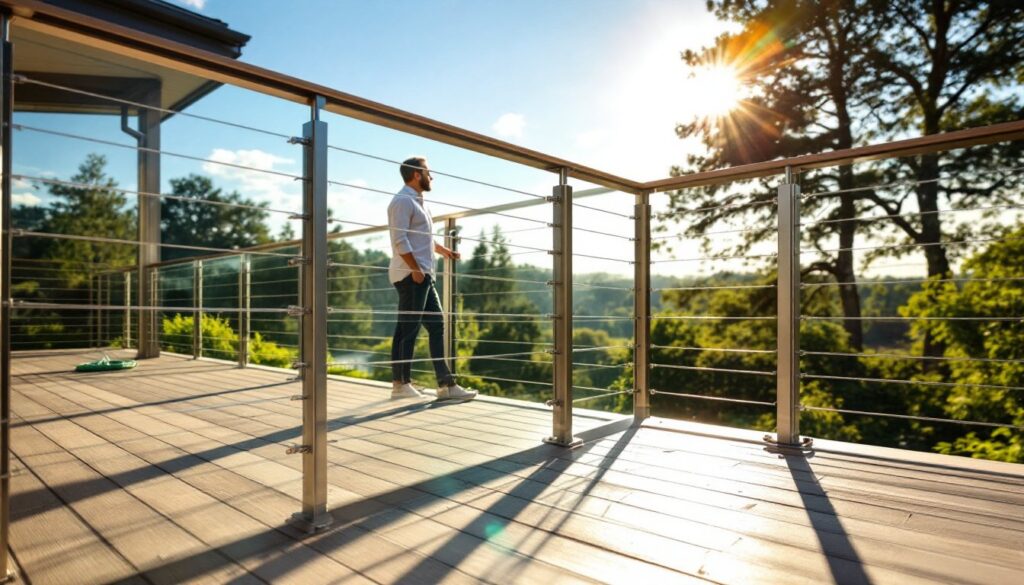
Horizontal cable railings give decks a clean, contemporary look without the transparency of glass. They use stainless-steel cables (typically 1/16-inch or 3/32-inch diameter) threaded horizontally between aluminum posts or frames. The cables are tensioned with end fittings and turnbuckles so they remain taut and don’t sag.
Cables appeal to homeowners who want an open aesthetic without the maintenance and cost of tempered glass. They’re slightly more affordable than glass systems and work equally well in salt-air environments. The spacing between cables is critical, building codes require openings no larger than 4 inches to prevent a child’s head from passing through. Some installers use 3-inch spacing as a safety buffer.
One note: cables can collect debris, leaves, pollen, dust, between the runs. A quick blast with a hose clears most of it. In very dusty or pollen-heavy regions, cable systems demand slightly more frequent cleaning than other styles, though far less than wood railings.
When shopping for cable systems, verify that the turnbuckles and end fittings are stainless steel, not coated aluminum. Stainless stands up better to seasonal tension changes and weather. Installation usually involves drilling holes through the aluminum frame at precise intervals, inserting cable anchors, and tuning each cable’s tension for a professional appearance. It’s doable for a confident DIYer, but a second pair of hands makes the job easier.
Mixed-Material Options For Visual Interest
Combining aluminum with wood, composite, or metal details creates railing designs that feel custom and refined. An aluminum frame might host horizontal wood slats spaced per code, merging the durability of aluminum with the warmth of timber. Another approach uses aluminum posts with composite or pressure-treated wood horizontal rails, balancing cost and appearance.
Metal artwork, wrought iron panels or laser-cut aluminum designs, can be inset into the aluminum frame for a signature look. These accents add personality without sacrificing durability. Because the primary structure is aluminum, weathering and maintenance issues stay minimal even if wood or composite elements are part of the design.
Customizing Colors And Finishes
Aluminum railings are available in a range of powder-coated finishes. Common colors include black, white, bronze, champagne, and gray, many matching common house exterior colors. Some manufacturers offer custom RAL colors if the homeowner wants something specific.
Powder coating is applied at the factory under controlled conditions and then oven-cured, creating a finish far more durable than paint applied onsite. It resists UV fading, chalking, and chipping better than traditional paint. If a railing gets scuffed or scratched during installation, touch-up paint pens designed for powder-coated aluminum can address minor damage.
For coastal or high-salt-exposure areas, specify systems with marine-grade powder coatings or anodized finishes. These offer enhanced corrosion resistance. The cost premium is modest compared to the frustration of a railing corroding prematurely near the ocean.
Installation Tips And Maintenance Guidelines
Before installation, measure the deck perimeter carefully and verify that the mounting surface, typically the deck rim or a bolted ledger, is level and sound. Soft, rotted, or displaced rim boards mean trouble. Replace compromised framing first: the railing is only as good as what it’s bolted to.
When ordering rails, account for post spacing accurately. Most systems use posts 4 to 6 feet apart, depending on the design and local code. Oversized spacing can cause the rail to flex excessively under load. Undersized spacing looks cramped. A quick call to the manufacturer with rough deck dimensions gets a layout diagram sorted before delivery.
Installation typically involves bolting aluminum posts to the deck rim using lag bolts or through-bolts with stainless-steel hardware. Drill pilot holes to prevent splitting and use washers under bolt heads to distribute load. Torque bolts to the manufacturer’s specification, usually 40 to 60 foot-pounds depending on bolt diameter. Loose bolts lead to movement, noise, and eventual failure.
Maintenance is minimal. Rinse the railing annually with a garden hose. In salty or dusty environments, use a soft brush and mild soapy water on heavily soiled areas. Avoid abrasive cleaners or pressure washers above 1500 PSI, which can damage finishes or loosen sealed joints. Check bolt tightness seasonally, temperature swings and wood movement can loosen fasteners over time.
If touch-up is needed, match the finish color and apply touch-up paint with a small brush. For larger damage, contact the manufacturer for patching advice or professional touch-up services. Most aluminum railings age gracefully and aren’t pristine for years, minor weathering is normal and part of their character.
Conclusion
Aluminum deck railings deliver a smart combination of aesthetics, durability, and minimal upkeep that wood and steel simply can’t match. Whether someone chooses the openness of glass panels, the clean lines of cable systems, or a mixed-material design with custom finishes, aluminum provides the framework for a railing that’ll look good and perform flawlessly for decades. The installation isn’t overly complex for a handy homeowner, solid planning, accurate measurement, and attention to fastener detail make the difference between a professional result and costly mistakes. For anyone ready to upgrade their deck’s safety and appearance without spending every summer refinishing, aluminum railings are the practical choice.