
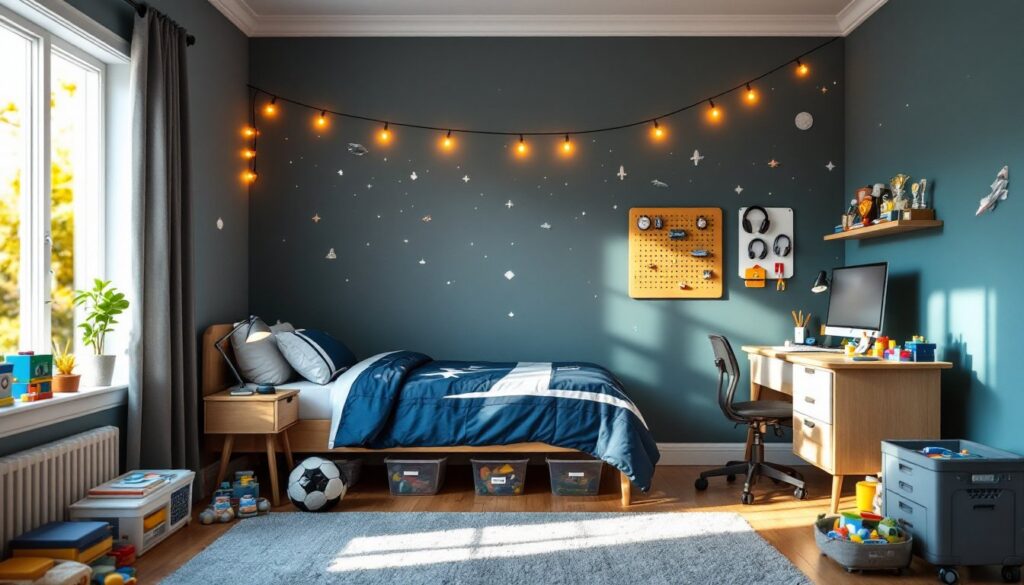
An 8-year-old’s bedroom is more than just a place to sleep, it’s his headquarters for reading, building, daydreaming, and storing an ever-growing collection of interests. Unlike a toddler’s room, which parents design entirely, a third-grader has opinions. He wants it to feel like his space. At the same time, smart design keeps things functional and organized as he grows. The challenge is balancing what he loves right now with choices that won’t feel babyish in two years or require a complete overhaul by the time he’s a teenager. This guide covers color, furniture, storage, décor, study zones, and lighting, the practical essentials for a bedroom that works and makes him want to spend time there.
Key Takeaways
- 8 year old boy bedroom ideas work best when balancing neutral walls with easily swappable themed décor through bedding, pillows, and wall art rather than permanent paint or wallpaper.
- Choose muted, mid-tone colors like slate blue or sage green for longevity, and test paint samples on actual walls in natural light before committing to a color.
- Smart furniture choices include twin beds with built-in drawers, adjustable youth-specific desks (24–28 inches high), and pieces that grow with your child without requiring constant replacement.
- Implement a clear storage system using labeled, stackable clear plastic bins organized by category—make it accessible and let your 8-year-old use it independently.
- Create three distinct zones in the bedroom: a work zone (desk with task lighting), a play zone (open floor space), and a rest zone (bed), using rugs and furniture placement to visually separate them.
- Layer three types of lighting—overhead ambient, task lighting (warm LED desk lamp at 2700K), and accent lighting—to reduce eye strain and adjust mood for different activities.
Color Schemes That Balance Style And Functionality
Color sets the mood and can make or break how a room feels. Bright primary colors pop, but they’re hard to live with day after day and date quickly. Muted, mid-tone colors, like slate blue, sage green, or warm gray, are far more versatile. They pair well with accent colors he can change easily (through bedding, wall art, or a painted accent wall) if his interests shift.
Consider painting three walls a neutral base and one accent wall in a color he picks. This gives personality without overwhelming the space. If he’s into a specific theme (sports, space, dinosaurs), an accent wall in that color lets him explore it without committing all four walls. Avoid navy or very dark colors in smaller rooms: they make the space feel cramped and absorb light.
Bright white feels clinical. Instead, opt for warm whites or off-whites with subtle undertones. A light blue-gray, soft cream, or barely-there green provides the same clean backdrop but feels friendlier. Keep woodwork and trim a consistent shade so the room feels cohesive.
Test paint samples on actual walls before committing. Spend a day watching how the color looks in morning and afternoon light. What looks perfect in the paint swatch under fluorescent store lighting can surprise you at home.
Smart Furniture Choices For Growing Kids
At 8, he’s in an awkward size zone, too big for toddler furniture but not quite ready for full-size adult pieces. The trick is choosing pieces that scale with him and serve double duty.
Twin beds remain the standard for this age. A twin mattress is 39 inches wide by 75 inches long, which fits most standard frames. Look for beds with built-in drawers underneath: they provide storage without eating up floor space. Alternatively, a bed frame that sits high enough to allow storage bins underneath works just as well and costs less.
Desk height matters. At 8, a standard desk may feel too tall, causing posture problems during assignments. Adjustable desks or youth-specific models (typically 24–28 inches high) work better than full-size office desks. As he grows, you can raise it or replace it without guilt.
A dresser and a nightstand round out the basics. Choose pieces with edges rather than rounded corners if he tends to be rough on furniture. Open shelving above or beside the bed provides display space for trophies, models, or books without needing another furniture piece.
Avoid overstuffing the room. Leave walking space and room to play. A cluttered bedroom feels chaotic and stifles creativity. Aim for no more than one major piece of furniture per wall, plus bed, desk, and storage.
Storage Solutions That Encourage Organization
An 8-year-old has stuff: action figures, LEGO, books, sports equipment, art supplies, school papers. Without clear homes for everything, chaos wins. The best storage system is one he actually uses, which means it needs to be accessible and labeled.
Clear plastic bins with labels are storage MVPs for this age. He can see what’s inside without opening every container, and labels (pictures plus words) help him remember where things belong. Stackable bins fit under beds, in closets, or on low shelves. Sort by category: building materials, small collectibles, seasonal items.
A pegboard above the desk or dresser holds frequently used items, headphones, art supplies, a small flashlight. Hooks take up minimal space and make it easy to grab and return things. Avoid tiny hooks that require precision: large hooks are faster.
Closet organization starts with what’s within arm’s reach. Use a lower clothing rod (or add a second rod) so he can access shirts and pants without stretching. Lower shelves (or bins on lower shelves) keep shoes, hats, and off-season gear organized and accessible.
A rolling cart with shallow drawers works for small collections, craft supplies, or hobby materials. The mobility means he can pull it to the desk or bed as needed, then roll it away. Avoid open shelving that collects dust: closed bins look neater and contain mess better.
Limit how many categories of storage. Too many different container types creates decision paralysis. Stick to a consistent bin style and labeling system.
Themed Décor Without Outgrowing It Too Quickly
A themed bedroom can be magical, but 8 is right on the edge of theme switching. The key is keeping the core room neutral and letting the theme live in easily swappable items.
Popular Themes For This Age Group
Sports is perennial: soccer, basketball, baseball, skateboarding. Posters, a team bedspread, and accent pillows feed this interest without locking the room into it. Shelving for trophies or equipment is practical, not purely decorative.
Space and science capture curious minds. Stars on the ceiling (glow-in-the-dark stickers are simple and temporary), a poster of the solar system, and a globe or telescope model add interest. These themes age well and transition smoothly from science-obsessed 8-year-old to astronomy-loving preteen.
Adventure and exploration themes (jungle, camping, mountain climbing) are visual without feeling babyish. Weathered wood accents, map prints, and lantern-style lights create atmosphere.
Construction and building (LEGO, woodworking, vehicles) appeal to hands-on kids. Wall-mounted shelving displays his creations, and industrial-style storage fits the theme functionally.
The golden rule: keep walls and furniture neutral. Introduce the theme through bedding, pillows, wall art, and accessories that cost $20–50 to swap out when his interests shift. A removable wall decal costs less than repainting and takes five minutes to take down.
Avoid character-focused themes tied to shows or movies aimed at younger kids (unless he’s genuinely obsessed). Superheroes age better than cartoons, but even then, a poster is safer than bedding or wallpaper.
Creating A Homework And Study Zone
By third grade, assignments is non-negotiable. A dedicated study zone sets expectations and minimizes distractions. It doesn’t need to be fancy, just a desk, a chair, and clear rules about screen time and noise.
Place the desk perpendicular to or away from the bed, not directly across from it. Visual proximity to the bed triggers the urge to lie down and nap. Position it near a window if possible: natural light reduces eye strain and boosts focus.
The chair matters more than you’d think. A chair that’s too low or too high causes posture problems and leads to back complaints. His feet should rest flat on the floor (or a footrest), elbows bent at 90 degrees, with the desk at roughly elbow height. An adjustable desk chair designed for youth grows with him.
Keep frequently needed items (pencils, erasers, paper) within arm’s reach in a small organizer or cup. Keep distracting items (toys, games, screens beyond a permitted laptop) out of sight or the room.
Good lighting is critical. A desk lamp with a warm LED bulb (2700K color temperature) reduces eye fatigue without feeling institutional. Position it to the side of his working area to avoid glare on screens or paper.
Set a routine: assignments happens at the desk, in daylight or with the desk lamp on, at a consistent time. The space becomes associated with focus rather than play.
Lighting And Layout For Play And Relaxation
Lighting affects mood and function. A single overhead fixture isn’t enough, it creates harsh shadows, strains eyes during reading, and makes the room feel institutional.
Layer three types of lighting: overhead ambient (a ceiling fixture or fan), task lighting (desk lamp, under-shelf lights), and accent lighting (string lights, a small clip-on reading lamp). This flexibility lets him adjust brightness for different activities. Dimmers on overhead lights are worth the install, they keep options open without adding fixtures.
LED bulbs are efficient and produce less heat than incandescent. Warm white (2700K) feels cozy and supports sleep preparation: cool white (4000K) works better for tasks and study. He can’t change biology, but you can support it with light color.
Layout shapes the room’s function. The “work zone” (desk) should be separate from the “play zone” (floor, shelving for collections) and the “rest zone” (bed). If the room is small, use furniture placement and lighting to define zones visually.
Rugs anchor zones and define spaces. A rug under the play area or desk makes the room feel divided without walls. It also makes playing on the floor more comfortable and quieter for the room below.
Leave clear floor space. A bedroom that’s packed furniture-to-wall feels cramped and limits his ability to play, build, or move. Aim for at least one open area about 4 feet by 4 feet where he can sit, build with blocks, or move freely.
Cable management keeps the desk area clean and trip-free. A cord organizer or clips bundle wires and prevent tangling. Wireless solutions (charging mats, Bluetooth speakers) reduce clutter where possible.