
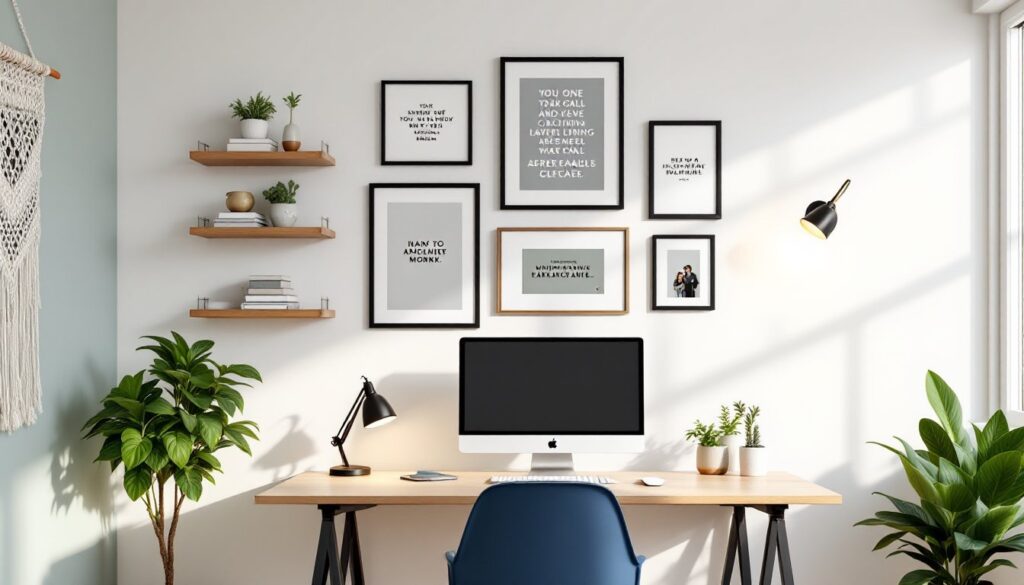
Working from home means your office walls are the backdrop to every video call, brainstorm session, and deadline push. Unlike a corporate cubicle, a home office is yours to shape, and it should reflect both professionalism and personality. Wall decor sets the tone for focus and creativity, turning a spare bedroom or corner into a space where productivity thrives. Whether someone’s juggling freelance projects, managing a small business, or building a career remotely, the right wall treatments make a real difference. This guide walks through practical, actionable home office wall decor ideas that balance aesthetics with function, avoiding Pinterest platitudes in favor of designs that actually work.
Incorporate Motivational Art and Quotes
The wall behind a desk or above the credenza is prime real estate for art that genuinely resonates. Unlike a poster bought on impulse, pieces that align with personal values and goals tend to sustain focus over months and years.
Framed prints with bold typography work well in tight spaces. A 20″ × 24″ framed print keeps proportions balanced on most walls without overwhelming a desk, and the frame itself becomes part of the design vocabulary. Look for pieces that combine philosophy or aspiration, “Done is better than perfect,” “Show up every day,” or industry-specific mantras, with clean, readable fonts. Pairing sans-serif text on a neutral background avoids visual noise while staying professional.
For a more curated approach, someone might commission a custom piece from a local artist or illustrator. This eliminates the mass-produced feel and directly supports creative work. A single custom framed piece, roughly 16″ × 20″, positioned at eye level when seated, creates a focal point that draws attention without demanding it.
Alternatively, a gallery wall of smaller framed quotes and prints adds layered interest. Using consistent frame colors, matte black or natural wood, ties the arrangement together. Keep spacing uniform (2-3 inches between frames) and align the top or middle edges horizontally to maintain a professional grid, not a chaotic scatter.
Add Functional Shelving and Storage Solutions
Wall-mounted shelving does double duty: it reduces visual clutter on the desk itself while creating a display surface for decor and essentials. This is where storage becomes part of the room’s aesthetic.
Floating shelves, 10-12 inches deep, sit cleanly against drywall and handle books, small plants, decorative boxes, and framed items without taking floor space. Install them using wall anchors rated for 25-50 lbs each, or if studs are available, drive screws directly into the wall framing (locate studs with a stud finder beforehand). Spacing shelves 16-18 inches apart vertically gives enough room for double-stacked books or small accessories.
Wood shelves feel warmer than metal, but they require more finishing and care. Pre-finished pine or birch shelves are budget-friendly: walnut or oak cost more but age gracefully. Metal brackets, whether industrial steel or minimalist aluminum, anchor the look. The combination of warm wood and matte-black brackets is nearly foolproof for contemporary home offices.
Cubbies or wall-mounted cabinets with doors hide papers and supplies while keeping the space visually calm. A 3-cubicle unit (roughly 36″ × 36″) can go above a side table or credenza. Mix open shelves with closed storage: books and plants on open shelves draw the eye, while files and clutter hide behind doors. This hierarchy keeps the space feeling intentional.
Use Color and Paint to Set the Right Mood
Paint is the cheapest way to completely transform a home office. The right color supports focus and energy: the wrong one drains both.
Neutral walls, soft grays, warm whites, or muted beiges, provide a calm foundation and let art, shelving, and furniture stand out. A neutral base coat allows flexibility: swap wall art, add new shelves, or change accent colors without repainting. Brands like Benjamin Moore, Sherwin-Williams, and Behr offer reliable formulations: for a 12′ × 12′ office, count on 1 gallon of paint covering approximately 350-400 sq. ft. with two coats, so 0.5 gallons typically suffices for walls alone.
An accent wall, usually behind the desk or on the wall facing into the room, adds personality without overwhelming the space. Soft blues and greens promote calm and are scientifically linked to reduced stress. Muted terracottas or warm grays feel energetic without being jarring. Apply primer first, especially on accent walls with deeper colors, to ensure even coverage and true color.
Semi-gloss or satin finishes reflect light and wipe down easily (helpful near pencils and coffee spills), while matte hides imperfections better. For a home office, satin finish strikes a practical balance. Avoid high-gloss: it reads more commercial than professional.
If renting, removable wallpaper or wall decals offer color without commitment. Quality peel-and-stick options from companies like Spoonflower hold up reasonably well and leave no residue, though they’re less durable than paint over time.
Display Personal Photos and Achievements
A home office should feel personal. Displaying family photos, travel memories, or accomplishments, diplomas, certificates, published work, reinforces identity and ownership of the space.
Create a modest photo wall that doesn’t feel cluttered. Use 8″ × 10″ or 5″ × 7″ frames in matching wood or metal to maintain cohesion. Arrange them in a loose grid or asymmetrical cluster, keeping 2-inch spacing between frames. Avoid the impulse to fill every inch: breathing room makes the display read as intentional, not a memory dump.
Mix photo frames with certificate frames or shadow boxes. A framed diploma or license at eye level reinforces professional credentials without arrogance. A shadow box holding a meaningful object, a medal, keepsake, or award, adds texture and interest while taking up less wall space than multiple frames.
Editing matters: keep photos that still spark joy and remove faded or outdated prints. Black-and-white or sepia-toned images feel more sophisticated than busy color photos crammed together. If transitioning to digital displays, a small digital photo frame (roughly 10″ × 8″) cycling through images is contemporary and clutter-free, though it requires power and occupies a shelf or wall-mounted bracket.
Install Stylish Lighting Fixtures
Lighting shapes mood and function. Wall-mounted fixtures, sconces, and track lighting transform a bare wall into a layered, professional environment.
Wall sconces flanking a mirror or positioned beside shelving add ambient light while serving as design elements. Install them 60 inches from the floor (center of the fixture) for eye-level warmth. Choose warm white bulbs (2700K color temperature) to reduce eye strain during long work sessions: cool whites (4000K+) feel clinical. If the office lacks hardwired sconces, swing-arm wall lamps plug into nearby outlets and swivel to direct light where needed. These cost $40–$150 depending on style and don’t require an electrician.
A track light system mounted horizontally above a desk or shelving area directs task lighting precisely. Adjustable heads let someone angle light onto specific work areas. Black or brushed-nickel finishes suit modern offices: brass goes well with warmer, more traditional palettes.
String lights or picture lights add subtle ambiance without over-illuminating. A low-wattage LED picture light clipped above framed art creates focal depth and reads as refined. Ensure any hardwired work follows local electrical code (NEC guidelines), and have a licensed electrician handle installations that require new circuits or wall penetrations.
Integrate Plants and Natural Elements
Live plants and natural materials humanize a workspace and improve air quality. They also soften hard architectural lines that can feel sterile.
Wall-mounted planters or floating shelves with potted plants create a living element without taking desk real estate. Small-to-medium potted plants (6–10 inches in diameter) suit most wall arrangements. Low-light tolerant varieties like pothos, snake plants, and ZZ plants thrive in offices away from windows. Succulents need brighter light but require less frequent watering. Water and mist according to each plant’s needs: inconsistency kills more office plants than anything else.
A living wall or green wall panel, moss, preserved plant material, or hydroponic modules, brings natural texture without the maintenance burden of live plants. These range from $100 to $500+ depending on size and type. They’re permanent, don’t drop leaves, and add genuine visual interest to a blank wall.
Natural materials like wood, stone, or cork in shelving, frames, or wall coverings ground the space. Reclaimed wood shelves, cork-backed wall treatments, or stone accent tiles echo nature indoors. These materials age gracefully and feel warmer than pure plastic or metal, supporting focus and reducing fatigue. A small woven wall hanging or macramé piece adds texture and bohemian warmth without demanding maintenance.
Conclusion
A home office wall doesn’t need to scream for attention. Instead, thoughtful decor, motivational art, functional shelving, intentional color, personal touches, good lighting, and natural elements, creates a backdrop that supports both productivity and wellbeing. Layer these ideas to fit the space and personality. Start with paint or one statement piece, add shelving for function, and grow from there. The best home office walls evolve with the person working there, reflecting values while staying focused on the job at hand.